

Summary
Trading margin FX is only offered through Margin FX Contracts at Pepperstone. Margin FX trading is the exchange of currencies in the global market, aiming to profit from fluctuations in exchange rates. Traders buy or sell currency pairs based on market analysis, using platforms to execute trades.
Written by: Ioan Smith | Expert Financial Writer
What is margin FX trading?
Margin FX trading, or foreign exchange trading, is the global marketplace for buying and selling currencies. Over 70 currency pairs are traded globally in margin FX with traders exchanging pairs such as EUR/USD, GBP/USD or USD/JPY aiming to profit from changes in exchange rates. It operates 24/5, allowing trading on currency value fluctuations based on economic factors, news, and market trends.
Margin FX trading is not all about learning “how” to trade. One of the most important overlooked factors which can impact profits and losses is “when” to trade. A trader must identify the right time to enter and exit trades. The right move at the right time can positively impact the overall trading experience. The importance of market hours in margin FX trading cannot be overstated.
The margin FX market remains active 24 hours a day but with more than a few passages of low to no activity. There are four major margin FX market sessions with some overlapping. Trading activity during the overlapping sessions is usually at its peak as compared to regular activity. The busiest trading sessions and time zones to trade in are between the London and New York sessions.
Generally accepted margin FX session times (using UTC):
- Sydney 2100-0600 (UTC +10 hours)
- Tokyo 0000-0900 (UTC +9 hours)
- London 0700-1600 (UTC +1 hour)
- New York 1200-2100 (UTC -4 hours)
Profits and losses rely on the volatility and liquidity of the market, so a trader can enhance profit margins by understanding the market sessions. Different market sessions provide versatility in choosing trading hours. Thus a trader can determine the best time to trade according to trading goals and preferences. The Sydney session gives traders a good and brief idea about the potential weekly trading direction. The Sydney session overlaps with the Tokyo session for a few hours, which results in peak activity and high volatility. The Tokyo session overlaps with the end of the Sydney session and the start of the London session. During this session, market volatility and liquidity are on the higher side, which provides new opportunities for traders. During the London session trading volume is significant, and market activity is very high as this session overlaps with two of the most important margin FX market sessions. The London session overlaps the end of the Tokyo session and the start of the New York session. The New York session is the most active and significant session of all. Its activity affects pricing, volatility, and liquidity globally. Most traders trade in overlapping sessions to benefit from the different conditions each trading session provides.
How does margin FX trading work?
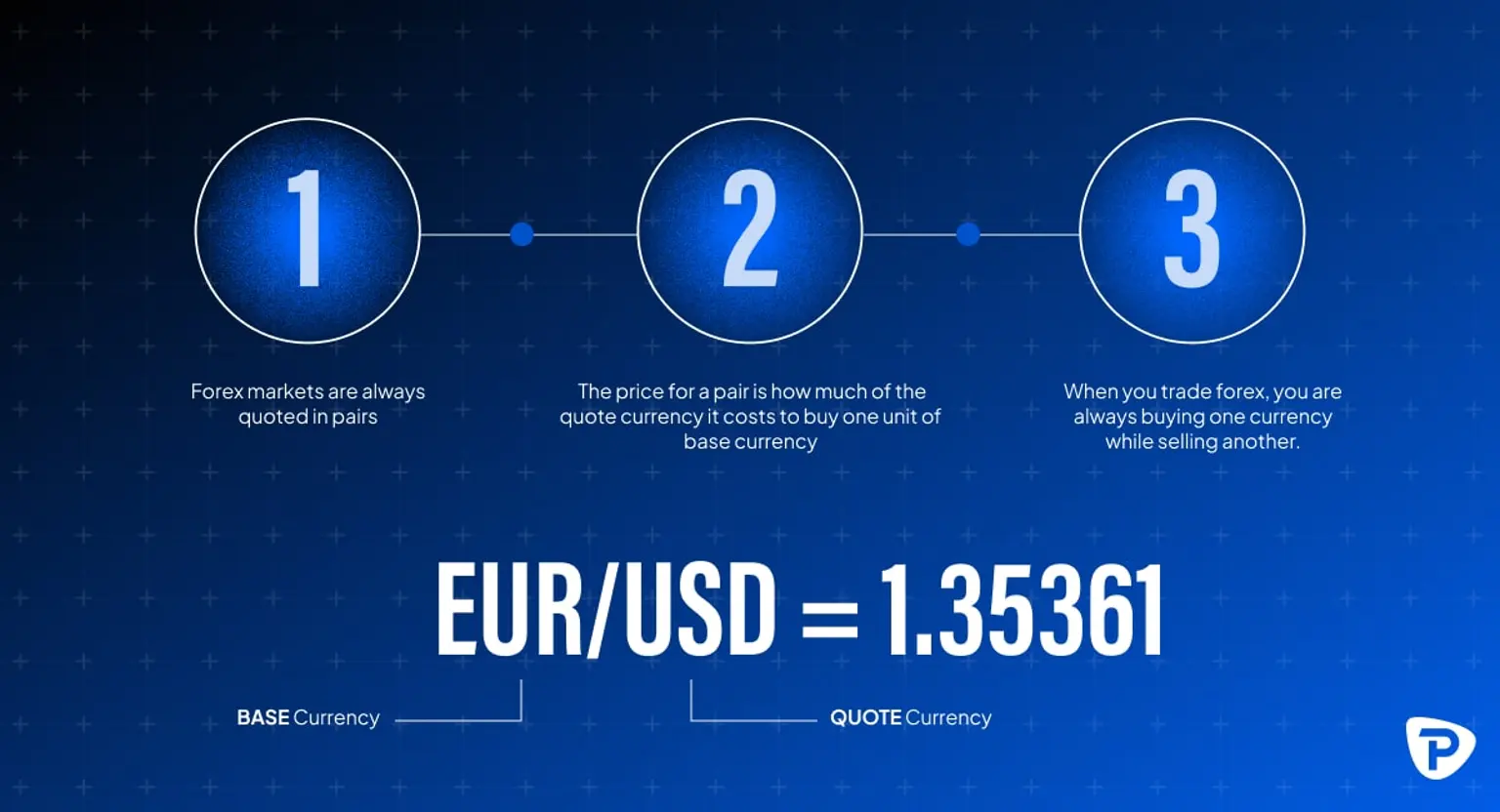
Margin FX trading works by buying one currency and selling another simultaneously in the foreign exchange market. Here's a simplified breakdown:
- Currency Pairs: Trading involves buying one currency and selling the other currency pair (e.g. EUR/USD).
- Exchange Rates: The rate at which one currency is exchanged for another determines the profit or loss.
- Market Orders: Market or limit orders placed to buy or sell currencies at current or specified prices.
- Execution: Orders are executed via a trading platform, and traders monitor positions to manage risks and profits.
- Leverage: Leverage controls larger positions with a smaller amount of capital, amplifying both potential gains and losses.
Technical Analysis: Traders use technical analysis (charts, indicators) and fundamental analysis (economic data, news) to make informed decisions.
What is a margin FX pair?
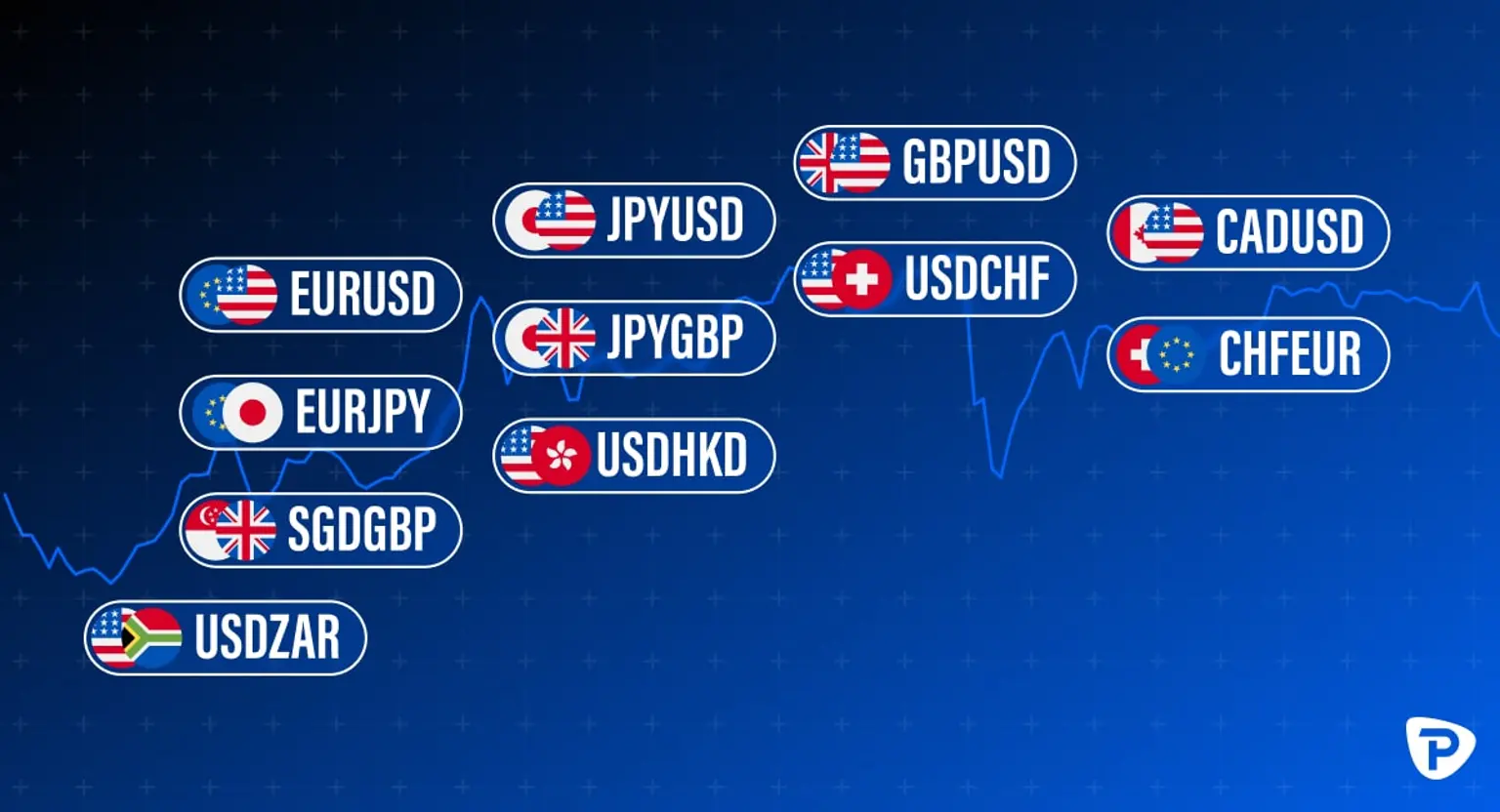
A margin FX pair is the quotation of two currencies in the foreign exchange market, representing their relative fair value.
What are the base and quote currencies?
As mentioned above, in a margin FX pair the base currency is the first currency listed and is the one being bought or sold. The quote currency is the second currency and represents how much of it is needed to purchase one unit of the base currency. For example, in the EUR/USD pair, EUR is the base currency, and USD is the quote currency. If the EUR/USD pair is quoted at 1.1100, it means 1 EUR can be exchanged for 1.11 USD. In USD/JPY, the base currency is USD, and the quote currency is JPY. If the pair is quoted at 144.00, it means 1 USD can be exchanged for 144.00 JPY.
What is a PIP in margin FX?
What is a lot in margin FX trading?
What are the benefits of margin FX trading?
What are the risks of margin FX trading?
What moves the margin FX market?
What is key margin FX terminology I need to know?
- Position: An open trade in the market.
- Leverage: Borrowed funds to control a larger position.
- Margin: The required amount to open and maintain a leveraged position.
- Pips: The smallest price movement in a currency pair.
- Exchange Rate: The price at which one currency is exchanged for another.
- Base Currency: The first currency in a pair, being bought or sold.
- Quote Currency: The second currency in a pair, used to value the base currency.
- Bid: The price at which you can sell a currency.
- Ask: The price at which you can buy a currency.
- Spread: The difference between the bid and ask price.
- Major Pairs: The most traded currency pairs, including USD.
- Exotic Pairs: Currency pairs that include one major currency and one from a developing economy.
- Stop-Limit Order: An order to buy or sell once a specific price is reached, but only within a set limit.
- Stop-Loss Order: An order to close a trade automatically at a set price to limit losses.