- English


Gold Nears $5,600: Powell’s Dovish Turn Sparks Rally, Prioritize Risk Control
.jpg?height=93&quality=30)
On January 29, gold extended its strong rally, briefly approaching $5,600, with intraday gains exceeding $260. Momentum-driven flows remain the main driver behind the price surge, while Powell’s early-morning press conference and USD debasement trades have added fresh fuel for bullish sentiment.
Powell’s Dovish Pivot Supports Gold
The January Fed meeting itself brought no major policy changes, as expected, but Powell’s post-meeting remarks triggered a significant market repricing.
On inflation, he softened his prior stance on “maintaining high rates for longer,” instead emphasizing the trend of falling inflation. Markets interpreted this as signaling a very high bar for rate hikes, while opening the discussion window on when and how policy might be eased.
He also suggested that if tariff-driven inflation remains contained, a more accommodative policy could be considered. This indicates that the Fed’s reaction function is gradually shifting from fighting inflation toward preventing a slowdown.
For gold, this dovish tilt is crucial—expectations of a nominal rate peak and declining real rates provide the macro backdrop for the rally.
USD Weakness Amplifies Gold Trend
Following the Fed meeting, the DXY failed to sustain a rebound, confirming resistance near 96.33. This contrasts sharply with prior market expectations that slower rate cuts and TACO trades should have strengthened the USD.
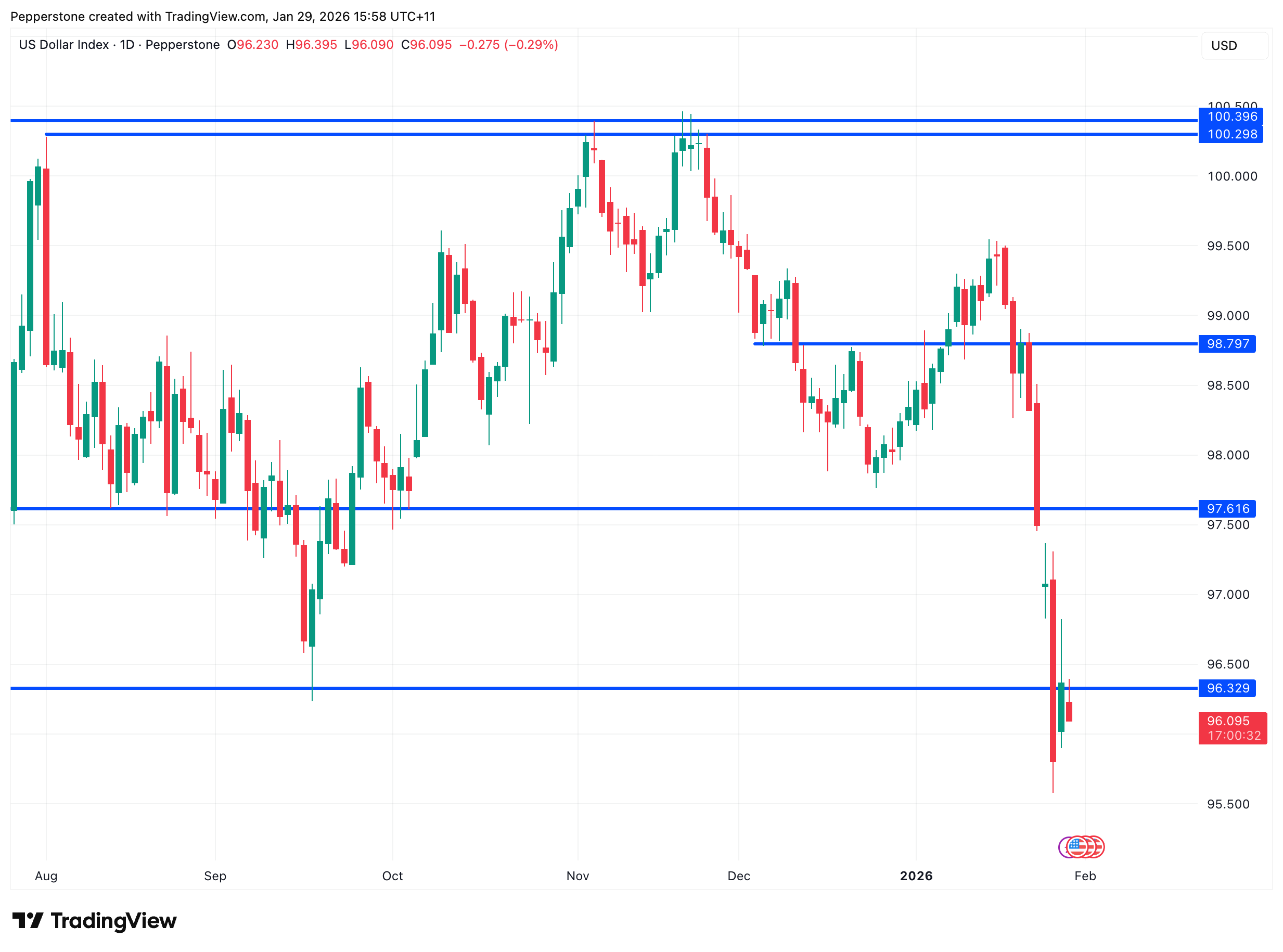
The dollar’s weakness is not solely due to Powell’s comments. It also reflects a broader global reallocation of USD assets. With persistent rate-cut expectations and ongoing U.S. fiscal and political uncertainty, pressure on dollar credibility has fueled debasement trades. Coupled with Trump’s tolerance of a weaker dollar, long-term funds have reduced USD exposure, with gold emerging as the primary beneficiary.
When safe-haven demand aligns with interest-rate expectations, gold often experiences non-linear surges, as seen in the current rapid rally.
Upside Potential Remains, but Position Management Is Key
Overall, momentum flows continue to drive gold, while dovish Fed expectations, a structurally weaker dollar, tariff- and geopolitics-driven safe-haven demand, and central bank purchases provide solid support.
Technically, a close above $5,600 opens short-term targets toward $5,670–$5,700, while pullbacks may find support near intraday low at $5,420.
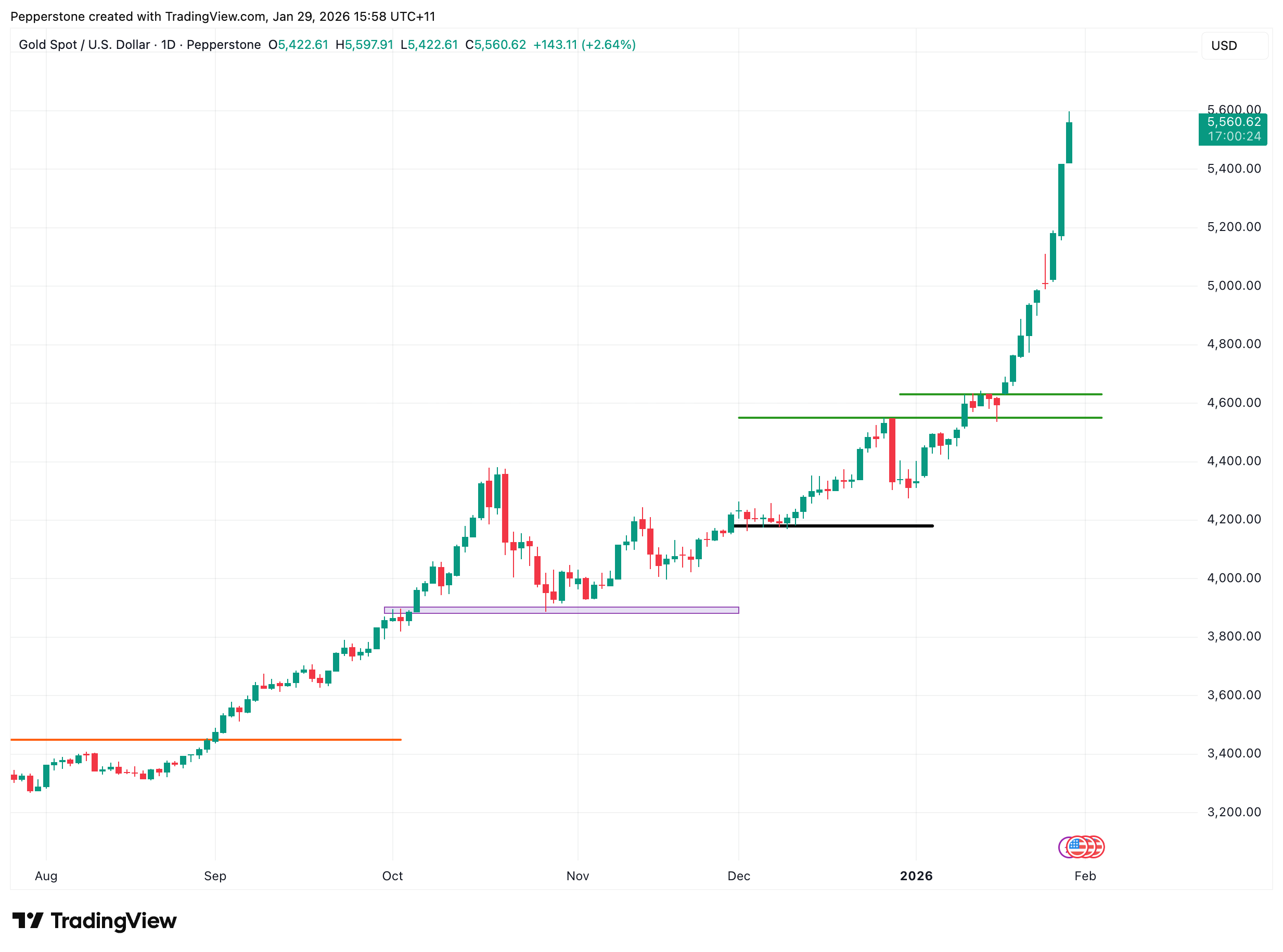
While the trend remains bullish, gold is now trading at elevated levels with high volatility, requiring traders to avoid overconfidence.
Concentrated long positions make gold highly sensitive to negative news. One-month implied volatility is currently around 26%, suggesting that gold could move roughly ±7.5% over the next month—equivalent to a potential $750 trading range.
In such a volatile environment, position sizing and risk management are more critical than directional bets and warrant extra caution from traders.
The material provided here has not been prepared in accordance with legal requirements designed to promote the independence of investment research and as such is considered to be a marketing communication. Whilst it is not subject to any prohibition on dealing ahead of the dissemination of investment research we will not seek to take any advantage before providing it to our clients.
Pepperstone doesn’t represent that the material provided here is accurate, current or complete, and therefore shouldn’t be relied upon as such. The information, whether from a third party or not, isn’t to be considered as a recommendation; or an offer to buy or sell; or the solicitation of an offer to buy or sell any security, financial product or instrument; or to participate in any particular trading strategy. It does not take into account readers’ financial situation or investment objectives. We advise any readers of this content to seek their own advice. Without the approval of Pepperstone, reproduction or redistribution of this information isn’t permitted.