- English
- 简体中文
- 繁体中文
- ไทย
- Tiếng Việt
- Español
- Português
- لغة عربية
- Монгол хэл



Gold continues to trade in a state of indecision, with last week's price action doing little to resolve the recent consolidation. The weekly candle highlighted the market's uncertainty, leaving traders with clearly defined levels to work too and that could define the next major move.
For now, the recent trading range remains intact. However, a decisive closing break on either side of $4,595 or $4,366 would likely trigger renewed momentum focused flows.
Key Technical Levels
Last week's high at $4,595 defines the upper boundary of the current consolidation. A close above this level would strengthen the bullish case and bring the May high at $4,773 back into focus.
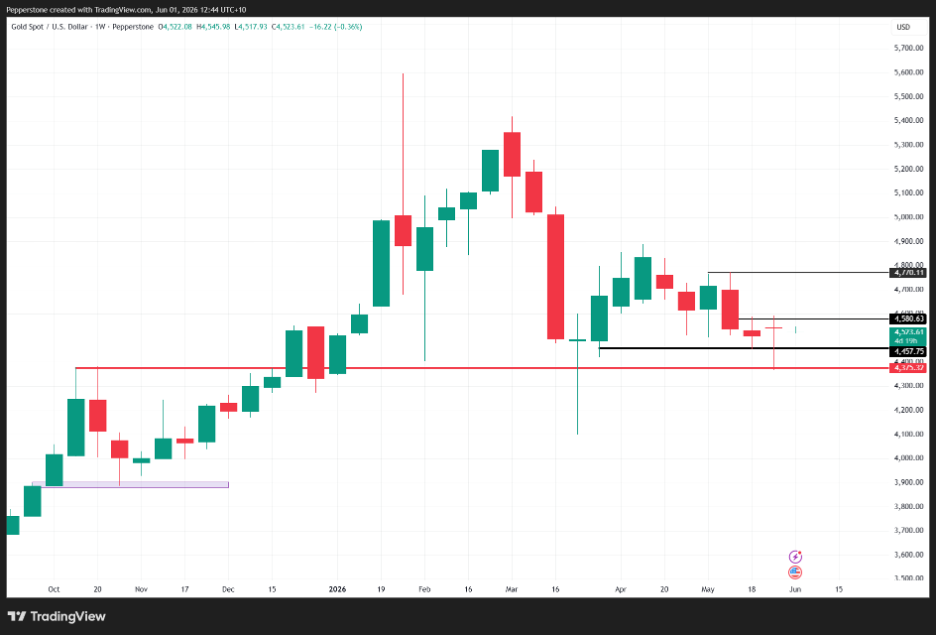
On the downside, the sellers briefly pushed gold below the prior week's low at $4,453, but were unable to secure a close beneath the level. Buyers stepped in aggressively around the 200-day moving average and horizontal support at $4,369, highlighting ongoing demand at lower levels.
As a result, last week's low at $4,366 now becomes the key downside trigger. A closing break below this level would suggest sellers have regained control and could open the door to a deeper corrective move.
The Iran Factor
One of the key drivers for gold this week remains the prospect of a memorandum of understanding between the US and Iran.
Should an agreement be reached and the market gains confidence that shipping through the Strait of Hormuz can normalise, crude oil may extend its recent decline. Lower energy prices would likely ease inflation expectations, encourage greater pricing of future Federal Reserve rate cuts and push Treasury yields lower.
That combination would provide a supportive backdrop for gold and could pave the way for a move back towards the May highs at $4,773.
Strong US Data Could Challenge the Bullish Case
The opposing force comes from this week's US economic calendar.
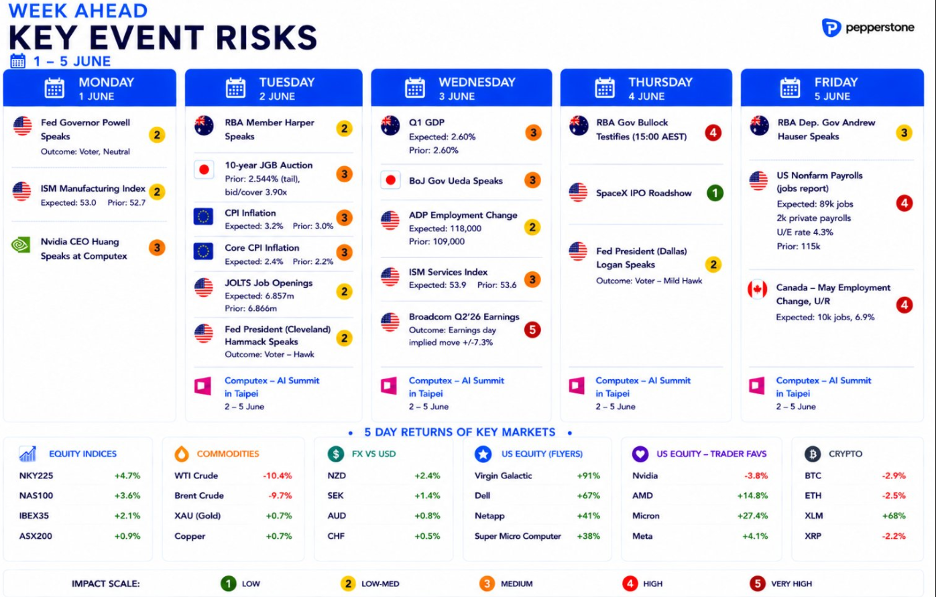
Markets expect improvements in both the ISM Manufacturing and ISM Services surveys, while Friday's Nonfarm Payrolls report is forecast to show another month of solid job creation.
Should the data meet or exceed expectations, confidence in the resilience of the US economy would likely strengthen further.
Robust growth, combined with still-elevated inflation pressures, could see traders build expectations of future Fed rate hikes. That would support Treasury yields and create a more challenging environment for gold.
With US corporate earnings coming in so strong and the S&P500 having rallied for nine consecutive weeks, positive economic surprises could provide gold with the catalyst for a downside break of the current range.
Crude Oil Remains the Wildcard
If negotiations between the US and Iran fail to progress, and traders become increasingly frustrated by the lack of a formal agreement, attention could quickly shift back to tightening physical oil market conditions.
Inventories have fallen to multi-decade low levels, and unless supply can come back to market, traders may look to rebuild long crude positions, supporting higher oil prices.
A renewed rally in crude would likely lift inflation expectations and push Treasury yields higher. That could weigh on gold as investors reassess the outlook for Fed policy and the timing of any future rate cuts.
The Bottom Line
The fundamental backdrop remains finely balanced, but the technical roadmap is becoming increasingly clear.
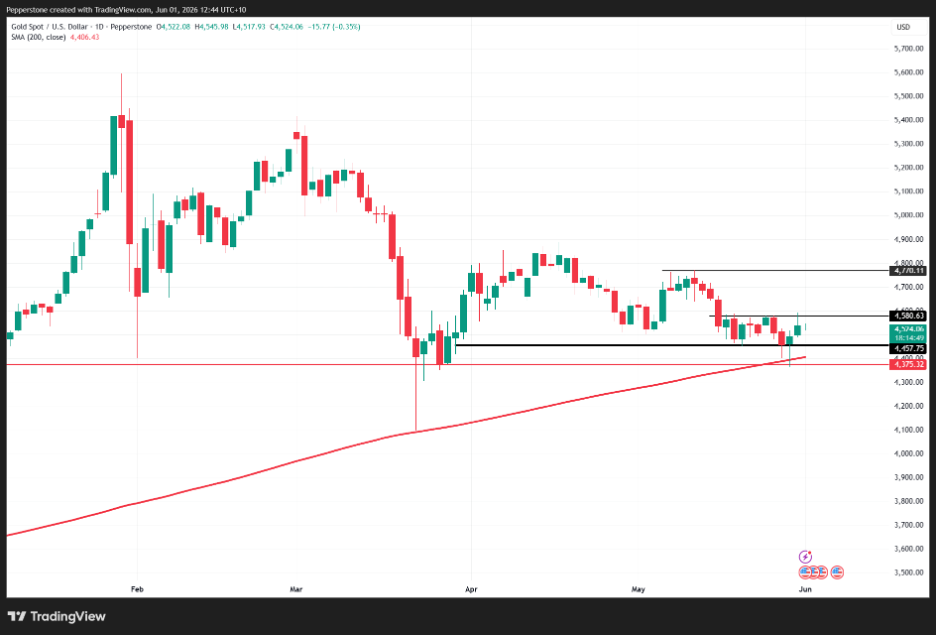
A close above $4,595 would put the May high at $4,773 back in play and reinforce the bullish outlook.
Conversely, a close below $4,366 would suggest sellers have regained control and increase the risk of a deeper retracement.
Ultimately, the direction of crude oil, Treasury yields, Fed pricing and developments surrounding US-Iran negotiations are likely to determine which side of the range breaks first and where gold trends next.
The material provided here has not been prepared in accordance with legal requirements designed to promote the independence of investment research and as such is considered to be a marketing communication. Whilst it is not subject to any prohibition on dealing ahead of the dissemination of investment research we will not seek to take any advantage before providing it to our clients.
Pepperstone doesn’t represent that the material provided here is accurate, current or complete, and therefore shouldn’t be relied upon as such. The information, whether from a third party or not, isn’t to be considered as a recommendation; or an offer to buy or sell; or the solicitation of an offer to buy or sell any security, financial product or instrument; or to participate in any particular trading strategy. It does not take into account readers’ financial situation or investment objectives. We advise any readers of this content to seek their own advice. Without the approval of Pepperstone, reproduction or redistribution of this information isn’t permitted.