- English


Anthropic IPO: A New Era for AI Investing — Who Can Still Command a Valuation Premium?

With Anthropic's IPO approaching, investors may soon have a new opportunity to gain direct exposure to a leading frontier AI model developer. As investment options expand, could the AI growth premiums embedded in existing tech stocks face renewed scrutiny? From SpaceX to chip suppliers and cloud computing giants, different business models could see markedly different valuation outcomes.
Anthropic updated its IPO filing on November 2, with plans to list on the Nasdaq under the ticker ANT. While the final offering price and fundraising size have yet to be determined, market discussions have centred on a potential valuation of $1.5 trillion to $2 trillion.
More important than the size of the listing, however, is how the IPO could change the way investors gain exposure to AI growth.
Over the past few years, investors have largely accessed the AI theme through chip suppliers such as Nvidia and Broadcom, alongside tech giants including Microsoft, Amazon and Alphabet. These companies have established businesses and relatively visible revenue streams, but their share prices do not fully reflect the commercial prospects of foundation model developers themselves.
As Anthropic enters the public market, investors will have an opportunity to gain more direct exposure to the model development business. This could shift AI investing away from broad exposure across the value chain towards a more selective approach based on different business models, while putting the valuation premiums of existing tech stocks to a fresh test.
SpaceX: AI Business Growth May Not Translate into a Higher Valuation
SpaceX offers a compelling case study of how this shift could play out. Following its integration of xAI, SpaceX's operations span aerospace, Starlink satellite communications, Grok model development and AI compute services. This diversification provides multiple revenue streams, but also exposes investors to businesses with very different risk profiles.
The relationship between Anthropic and SpaceX is particularly noteworthy. SpaceX's third-quarter financial filings showed that a single customer accounted for 34.5% of quarterly revenue. Bloomberg subsequently reported, citing people familiar with the matter, that the customer was Anthropic.
Anthropic's latest IPO filing also disclosed computing agreements between the two companies worth up to $120.5 billion through 2029. However, the agreements include early termination provisions, meaning actual revenue will depend on how the contracts are fulfilled.
If Anthropic successfully completes its fundraising and expands its computing purchases, SpaceX's related businesses could benefit. Whether that growth translates into a higher valuation, however, is a separate question.
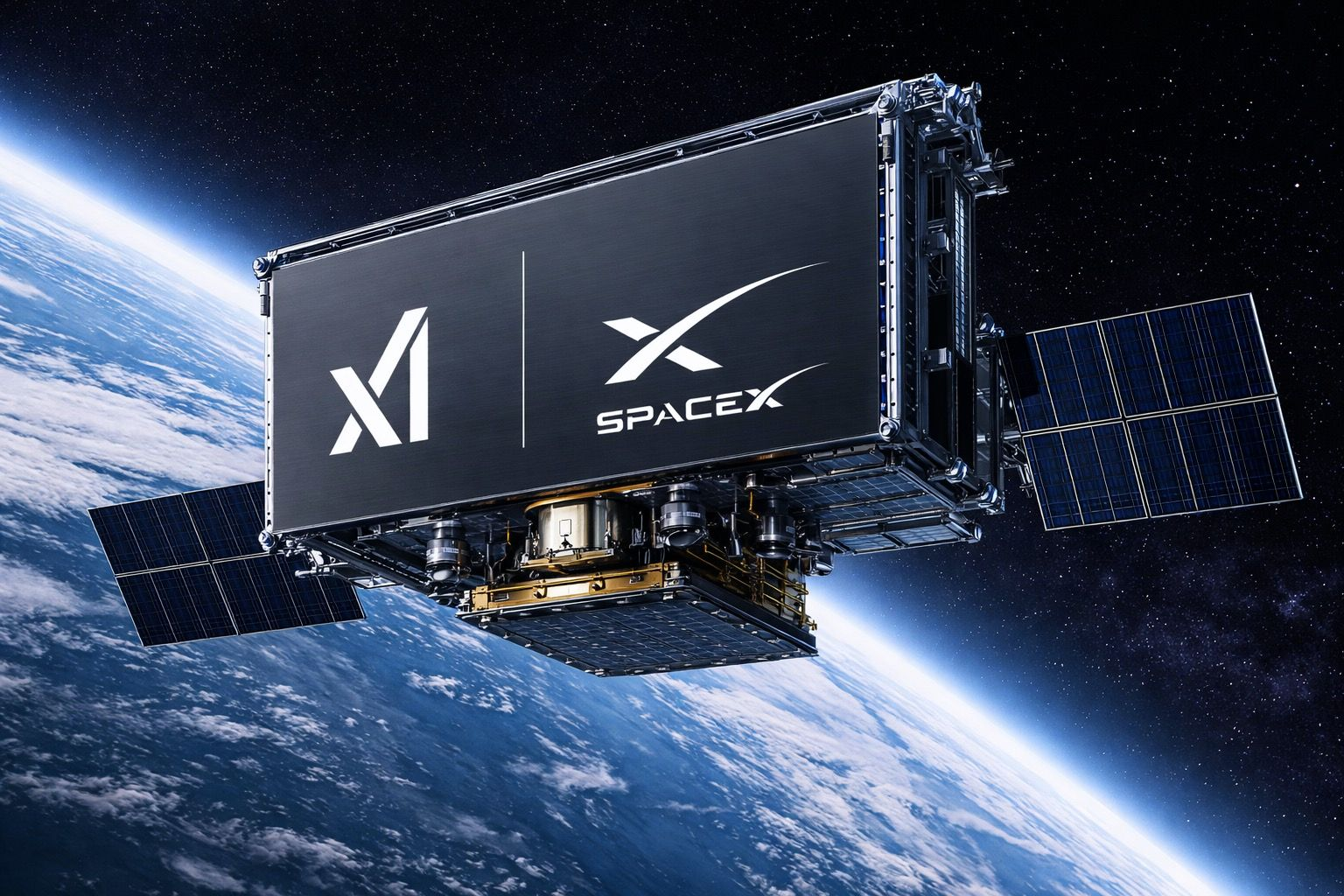
On one hand, SpaceX's compute services revenue depends on customer demand and infrastructure utilisation. On the other, Grok must establish a sustainable competitive advantage in a rapidly evolving AI model market. These businesses have different growth drivers, cost structures and risks.
Once Anthropic goes public, investors will have a more direct way to gain exposure to foundation models. That could encourage them to distinguish more carefully between the value of SpaceX's compute services and its model development business, rather than continuing to assign a broad growth premium to its AI operations as a whole.
As a result, even if Anthropic's expansion improves SpaceX's revenue outlook, a corresponding increase in its valuation is far from guaranteed.
Broadcom and Nvidia: Why They May Not Be the Losers
That pressure may not extend across the entire AI value chain.
Unlike SpaceX, Broadcom and Nvidia primarily benefit from growing demand for model training and inference, rather than competing directly in the foundation model market.
Anthropic's latest IPO filing disclosed approximately $1.2 billion in commitments under a five-year leasing arrangement involving Broadcom's custom AI accelerators. As long as the underlying demand for compute continues to grow, Broadcom could benefit.
The same logic applies to Nvidia. Even if some capital shifts towards Anthropic, expanding model training and inference workloads could continue to support demand for GPUs and related infrastructure.
In other words, investing directly in AI models and investing in chip suppliers are not necessarily mutually exclusive.
The distinction lies in what drives their valuations. Model developers must demonstrate that their technological advantages can translate into sustainable revenue and profits, while chip suppliers depend more heavily on customer capital expenditure, order growth and margins. Anthropic's IPO could encourage the market to differentiate more clearly between these sources of growth and their associated risks.
Cloud Giants: Cooperation and Competition Go Hand in Hand
The picture is more complicated for Microsoft, Amazon and Alphabet. These companies provide cloud infrastructure while also developing their own AI products and models.
Anthropic's expansion could increase demand for computing capacity from AWS and Google Cloud. At the same time, Claude's growing competitiveness could challenge the commercial prospects of other AI products.
Anthropic's listing may therefore not necessarily undermine the overall valuations of these tech giants, but it could prompt investors to draw a sharper distinction between revenue generated by cloud services and the growth potential of their proprietary AI products.
With capital expenditure remaining elevated, the key question may increasingly be whether AI investment can generate additional profits and free cash flow, rather than simply drive higher demand for compute.
An OpenAI IPO Could Drive Further Valuation Divergence
This shift may only be the beginning. According to reports, OpenAI President Greg Brockman said the company expects to be IPO-ready in 2027, with enterprise customers now accounting for more than half of its revenue.
If OpenAI subsequently goes public, investors will be able to compare the revenue growth, monetisation capabilities and competitive advantages of different foundation model developers more directly. This could push AI investing beyond its previous concentration on the compute theme towards a more selective approach to different business models.
However, direct exposure to model developers does not necessarily mean higher returns. Intense competition, rapid technological change and high computing costs could also weigh on margins and valuations.
Who Can Still Command an AI Valuation Premium?
Overall, Anthropic's IPO could become a new catalyst for valuation divergence across the AI sector. Rather than focusing solely on short-term capital rotation, the more important question is whether traders begin reassessing the growth value of model development, compute infrastructure and cloud computing businesses.
Traders should watch Anthropic's offering price, institutional demand and the relative performance of AI-related stocks such as SpaceX, Broadcom and Nvidia. If Anthropic attracts strong demand while other AI stocks continue to underperform, it could signal a reallocation of capital. Conversely, a broad rally across the AI value chain could suggest that investor enthusiasm for the sector is expanding further.
And this battle over market valuations may begin well before Anthropic officially lists. Pepperstone has already launched its Anthropic Pre-IPO Perpetual CFD (ANT.US-PERP), allowing traders to take long or short positions based on their expectations for Anthropic's pre-listing price movements, without having to wait for its public debut.
The material provided here has not been prepared in accordance with legal requirements designed to promote the independence of investment research and as such is considered to be a marketing communication. Whilst it is not subject to any prohibition on dealing ahead of the dissemination of investment research we will not seek to take any advantage before providing it to our clients.
Pepperstone doesn’t represent that the material provided here is accurate, current or complete, and therefore shouldn’t be relied upon as such. The information, whether from a third party or not, isn’t to be considered as a recommendation; or an offer to buy or sell; or the solicitation of an offer to buy or sell any security, financial product or instrument; or to participate in any particular trading strategy. It does not take into account readers’ financial situation or investment objectives. We advise any readers of this content to seek their own advice. Without the approval of Pepperstone, reproduction or redistribution of this information isn’t permitted.