- English (UK)


US Dollar Strength Builds as Inflation and Oil Risks Reprice Fed Expectations

Key Takeaways
• The US dollar is regaining leadership in FX markets as the dollar index breaks above near-term resistance and approaches the 100 level.
• Rising oil prices and energy supply concerns are reshaping global macro expectations and currency flows.
• US one-year inflation swaps have surged above 3%, prompting a repricing of Federal Reserve rate expectations.
• The two-year US Treasury yield has climbed to around 3.74%, reflecting markets pricing out expected rate cuts.
• Momentum in the dollar is attracting systematic and trend-following flows across FX markets.
• Continued tensions around the Straits of Hormuz could support further US dollar strength in the near term.
US Dollar Regains Leadership in FX Markets
The US dollar has reasserted itself as perhaps the preeminent currency to own in the short term, stealing some of the momentum away from the Australian dollar, which had been the currency du jour in recent weeks. The shift is visible in the technical setups across the FX market, where the dollar is breaking higher against a number of major peers.
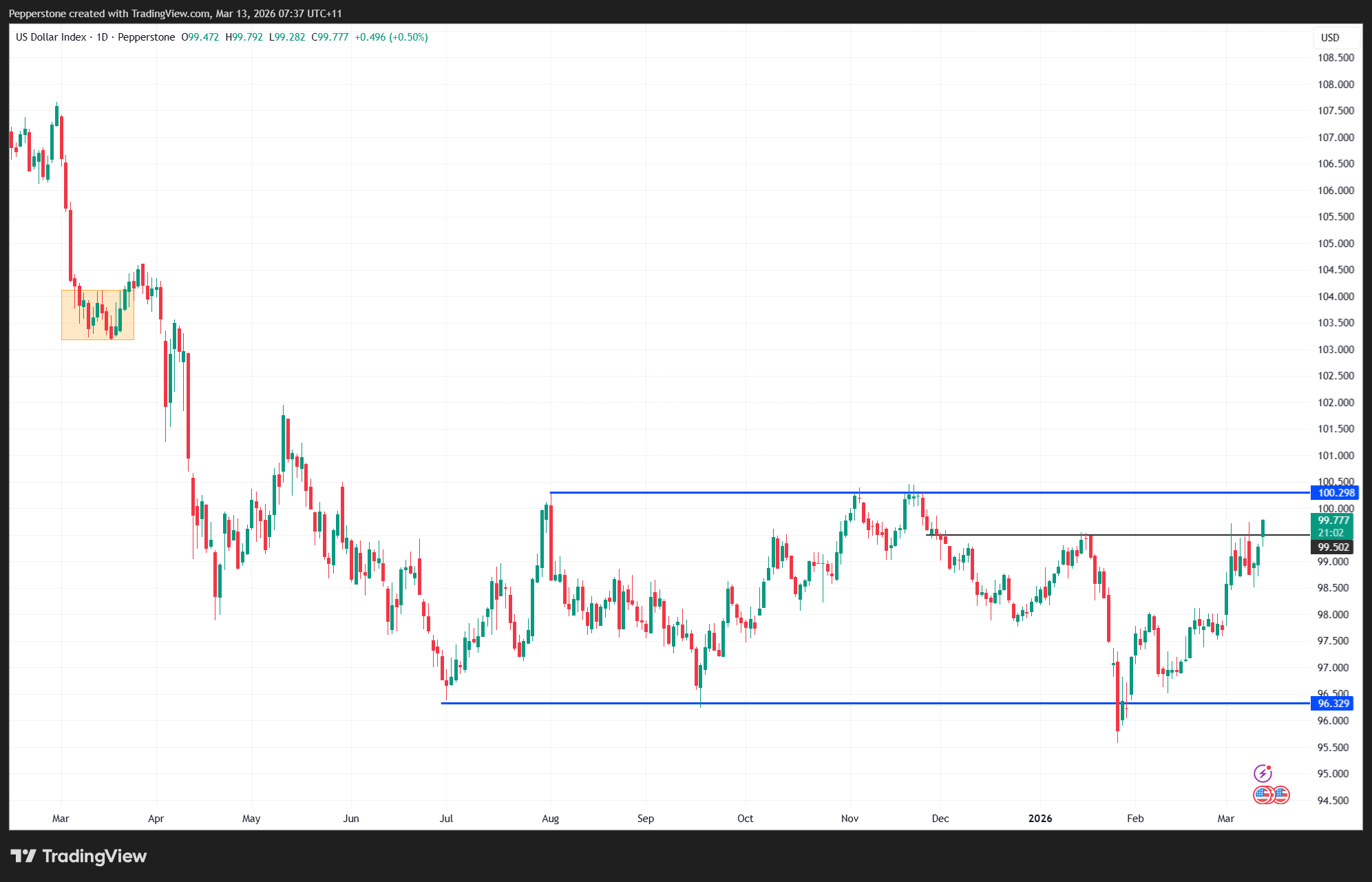
The US Dollar Index has broken above its near-term range highs of 99.521 and now looks set to test the upper boundary of the broader range it has held since August 2025, just above the 100 level. Much of the direction in the dollar index is naturally driven by the euro, and EURUSD is now threatening a break below its year-to-date lows of 1.1546.
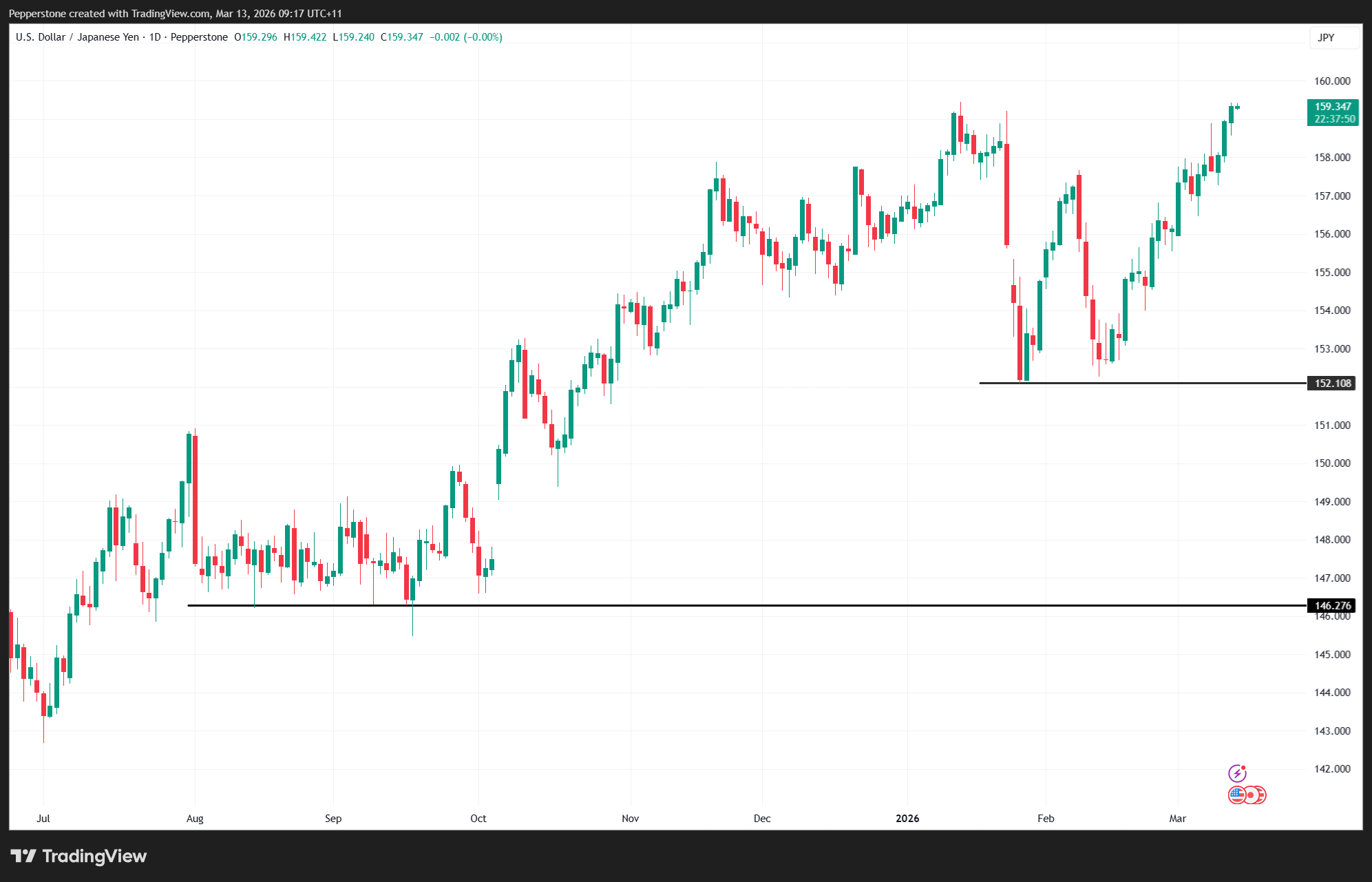
Elsewhere in the FX market the dollar is also showing strength. USDSEK has broken higher in a strong technical move, NZDUSD continues to trend lower, and USDJPY is pushing to fresh year-to-date highs. Taken together, the price action suggests the US dollar is once again attracting flows across multiple currency pairs.
Three Shocks Driving the Dollar Move
Markets are currently grappling with what can be described as three major shocks to the system.
The first is an oil price shock, the second is a broader energy supply dynamic, and the third is a trade shock linked to Iran’s growing control over access through the Straits of Hormuz.
In this environment the United States stands out relative to many other economies. The country is geographically removed from the Gulf region, is a net energy exporter, and is the world’s largest producer of crude oil and liquefied natural gas. These factors provide the US economy with a degree of insulation compared with economies that are more dependent on imported energy. That said, the US economy is still sensitive to rising price pressures, and higher energy costs could weigh on consumption and corporate margins over time. This leaves open the possibility that US equities could see further drawdowns if inflation pressures intensify.
Inflation Expectations and Fed Pricing Shift
One of the most important drivers of the US dollar rally has been the repricing of inflation expectations and Federal Reserve rate expectations. Volatility in US dollar options markets has now risen to its highest level since April 2025, highlighting the heightened uncertainty in currency markets.
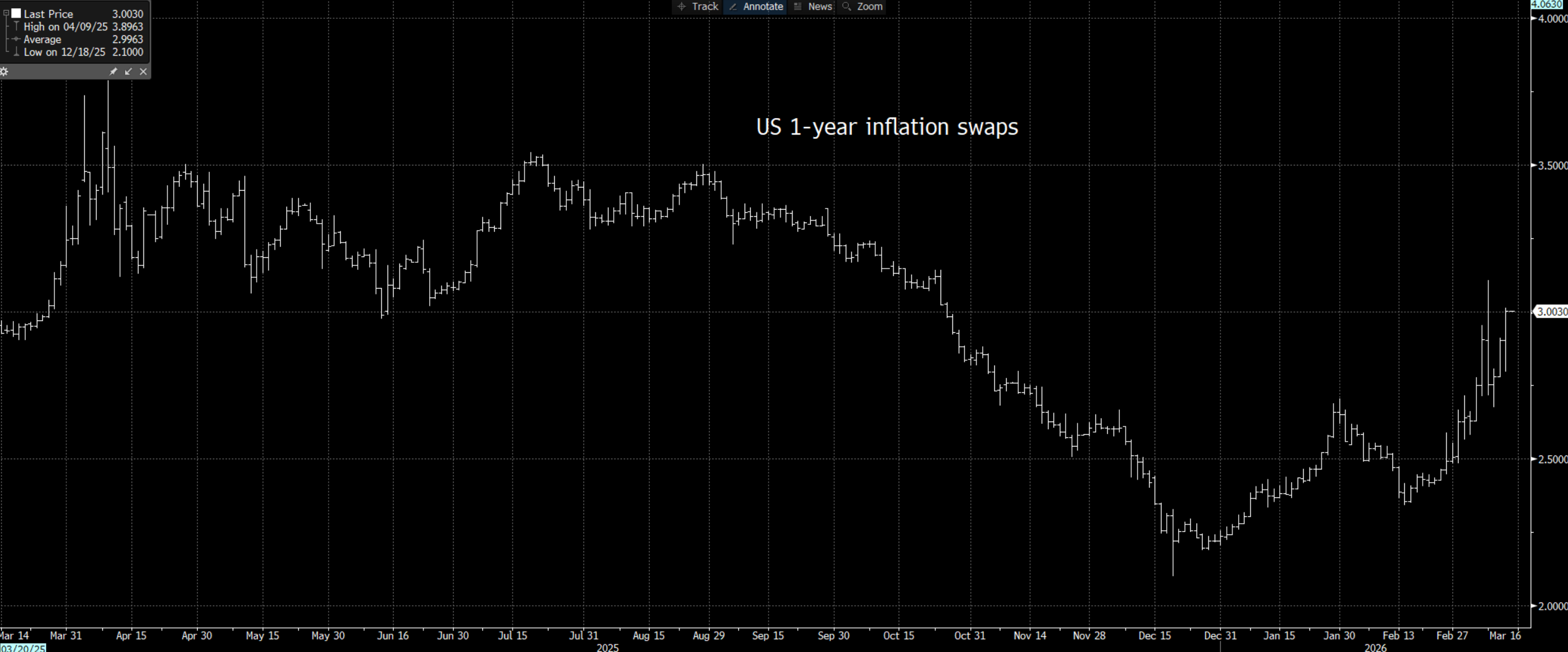
US one-year inflation swaps have risen sharply, moving from 2.34 percent in February to above 3 percent, the highest level since October 2025. While longer-term inflation expectations remain relatively well anchored, short-term inflation expectations have clearly started to move higher as energy prices surge.
This shift is already influencing US interest rate markets. The two-year US Treasury yield has risen to around 3.74 percent, reflecting the rise in short-term inflation expectations. Importantly, the two-year yield is now trading above the level the Federal Reserve pays on reserve balances, making movements in this part of the curve particularly relevant for policymakers.
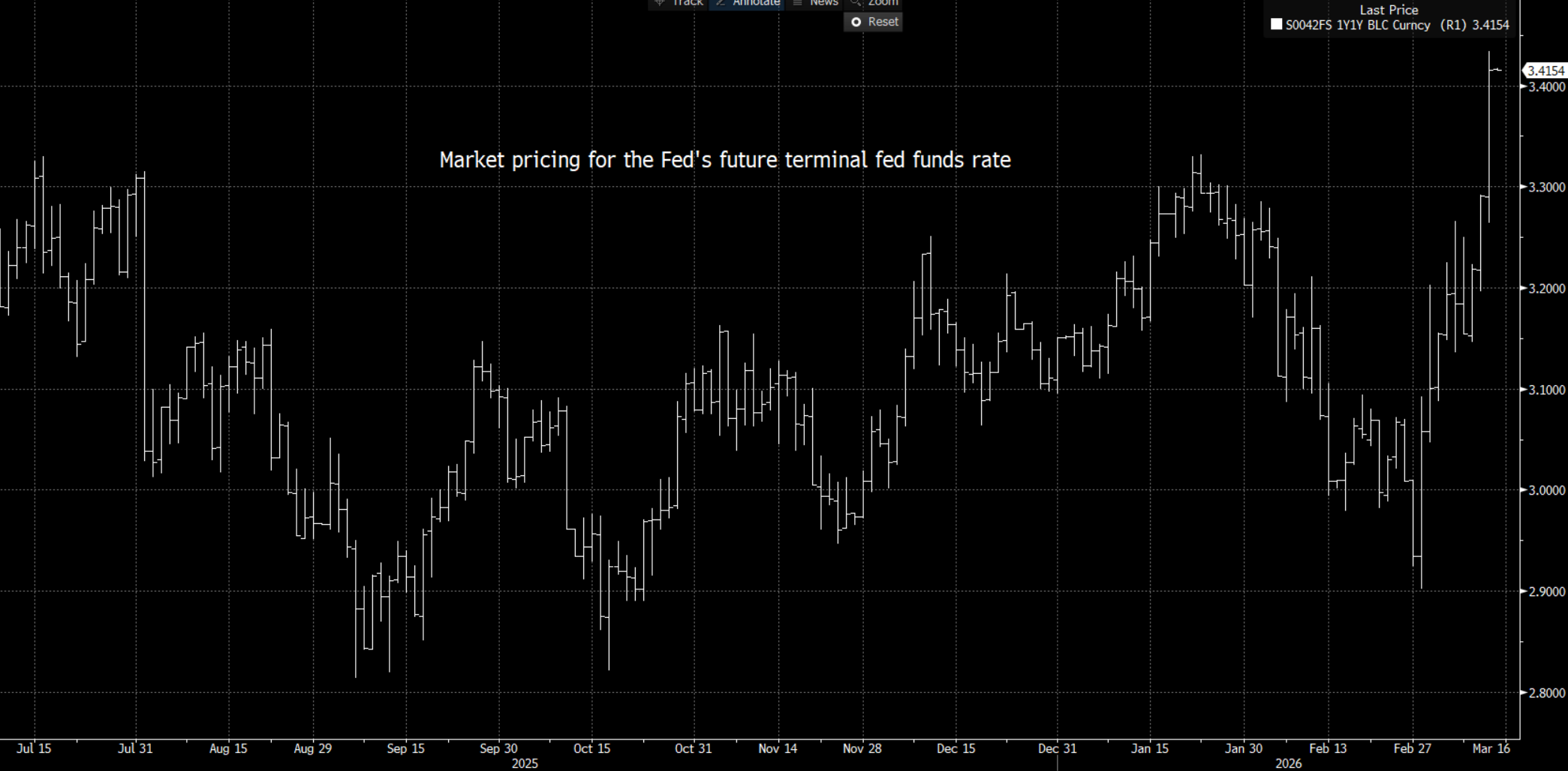
Market pricing of the terminal Fed funds rate has also moved significantly. Expectations for the peak policy rate have risen from around 2.9 percent on 2 March to approximately 3.41 percent. In effect, markets are rapidly pricing out previously expected rate cuts, a dynamic that has pushed Treasury yields higher and supported the US dollar.
Technical Momentum and FX Flows
With the dollar breaking higher technically, the focus now shifts to momentum and positioning. When the rate of change in a currency increases, it often attracts additional flows from systematic and momentum-based traders.
Trend-following hedge funds and commodity trading advisors may begin increasing long dollar exposure through the futures market. At the same time, other FX market participants may reassess their existing dollar short positions and hedging ratios.
Currency markets often exhibit self-reinforcing dynamics during strong moves. Once momentum builds, additional capital tends to follow. In that sense, the Treasury market, particularly the two-year yield, has become a critical driver of the next phase in the dollar move.
Strait of Hormuz Risks Remain a Key Catalyst
Looking ahead, developments around the Straits of Hormuz remain central to the macro outlook. If markets were to see a reconciliation that allowed energy shipments to move freely through the strait, the US dollar could quickly come under selling pressure as energy prices stabilise. For now, however, that scenario does not appear imminent. Recent news flow suggests Iran’s position in the region is strengthening and that tensions around energy supply routes may persist.
Final Thoughts
For the moment, the US dollar is benefiting from a powerful combination of rising energy prices, higher short-term inflation expectations, and a repricing of Federal Reserve policy. With Treasury yields moving higher and the dollar breaking key technical levels, momentum dynamics are beginning to play a greater role in FX markets.
Unless tensions around the Straits of Hormuz ease materially, the current environment could continue to support US dollar strength. A sustained move above the 100 level in the US Dollar Index would likely attract further systematic flows and reinforce the broader bullish trend in the currency.
The material provided here has not been prepared in accordance with legal requirements designed to promote the independence of investment research and as such is considered to be a marketing communication. Whilst it is not subject to any prohibition on dealing ahead of the dissemination of investment research we will not seek to take any advantage before providing it to our clients.
Pepperstone doesn’t represent that the material provided here is accurate, current or complete, and therefore shouldn’t be relied upon as such. The information, whether from a third party or not, isn’t to be considered as a recommendation; or an offer to buy or sell; or the solicitation of an offer to buy or sell any security, financial product or instrument; or to participate in any particular trading strategy. It does not take into account readers’ financial situation or investment objectives. We advise any readers of this content to seek their own advice. Without the approval of Pepperstone, reproduction or redistribution of this information isn’t permitted.