
Key Takeaways (Summary):
• Oracle has lifted FY2026 capex by $15bn to $50bn, driving sharply negative free cash flow
• Net leverage is approaching 4x, placing significant strain on the balance sheet
• As a strategic partner to OpenAI, Oracle sits at the centre of the AI infrastructure build-out
• Markets are focused on execution risk, funding costs, and credit rating pressure
• Options imply a large earnings-day move of around +/-10.3% - Oracle’s results may have implications well beyond the stock itself, impacting the broader AI investable universe
Background: Capex Surge and Balance Sheet Stress
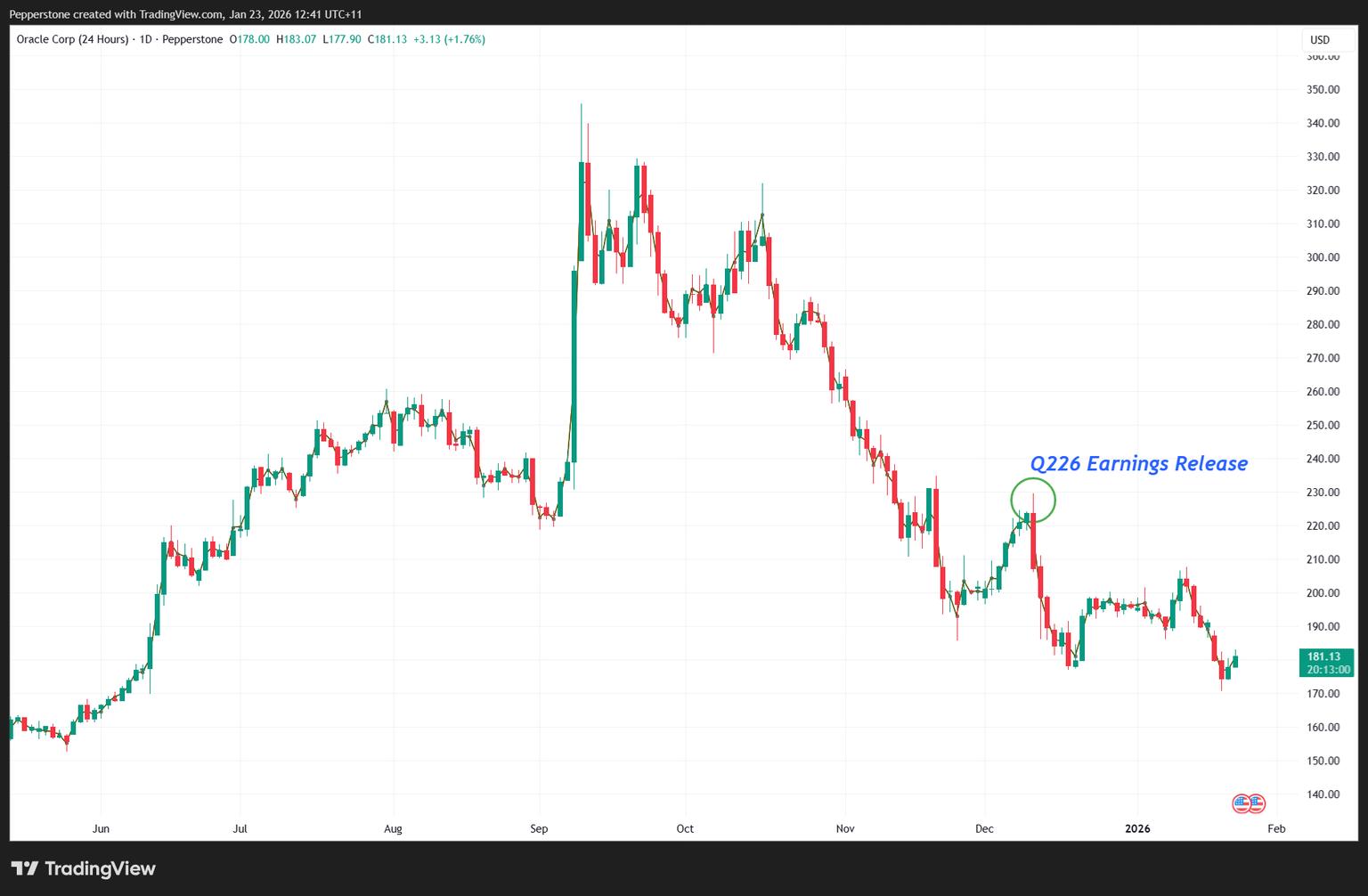
Following its Q2 FY26 earnings release on 10 December, Oracle raised its FY2026 capital expenditure plans by $15bn to $50bn. At the same time, free cash flow deteriorated sharply, blowing out to around -$10bn, alongside an increased net debt position.
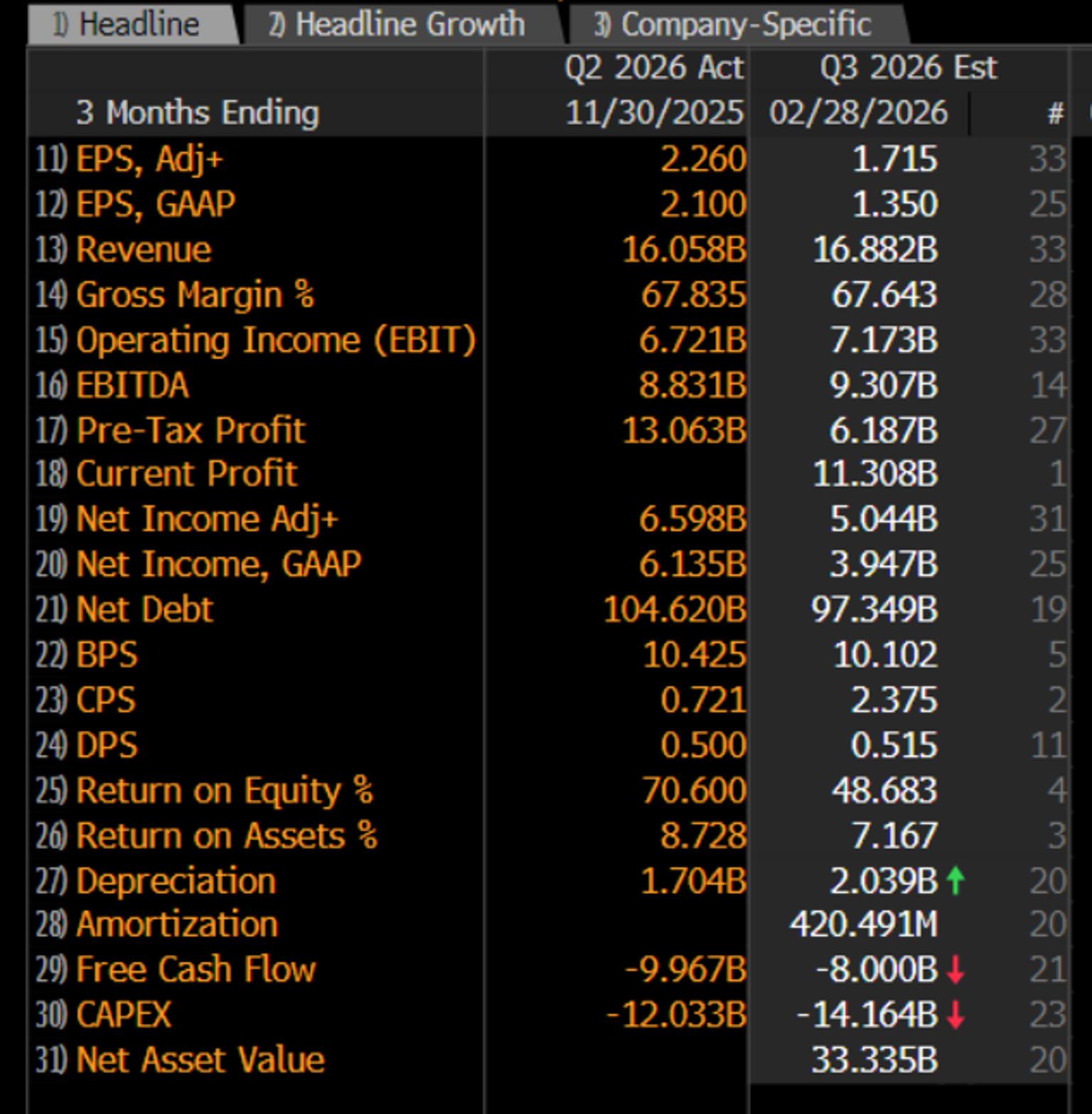
As a result, Oracle now carries a net leverage ratio, measured as net debt to EBITDA, close to a precarious 4x. This has placed considerable strain on the balance sheet and elevated investor concern around funding sustainability.
Oracle’s Central Role in the AI Infrastructure Build-Out
As a major strategic partner to OpenAI, Oracle sits at the heart of the global AI infrastructure expansion. Any sustained rise in market volatility or tightening in corporate bond and private credit markets would have meaningful implications for OpenAI’s funding environment and, in turn, the returns Oracle can generate on its rapidly expanding base of invested capital.
Importantly, Oracle has increasingly become the poster child for perceived risk within the AI ecosystem.
Investor Focus: Execution Risk and Funding Concerns
Investor attention is firmly centred on the high execution risk associated with Oracle’s aggressive data-centre expansion, the company’s ability and cost to fund this growth through corporate debt markets, and the additional pressure this places on an already constrained balance sheet.
Concerns have been building around the risk of a future credit rating downgrade and the possibility that Oracle may ultimately need to raise additional capital through equity issuance. These risks sit uncomfortably alongside uncertainty over the returns that can be generated from such large-scale capital deployment.
Options Markets Signal Elevated Earnings Risk
It is therefore little surprise that options pricing implies a punchy +/-10.3% move in Oracle’s share price on earnings day. This makes Oracle the stock with the highest expected earnings-day move across Pepperstone’s US 24-hour CFD universe.
Management Sensitivity to Capex and Credit Ratings
Oracle’s management will be acutely aware of how sensitive the equity market is to any further increase in planned capex. Preserving the company’s BBB credit rating will be a key priority if Oracle is to continue funding its expansion plans successfully in the debt markets.
Why Oracle’s Earnings Matter Beyond the Stock
Oracle’s earnings are not just a risk or opportunity for traders in Oracle US 24-hour CFDs. The detail disclosed has the potential to resonate across the broader AI investable landscape, reinforcing the view that Oracle may be the most important US company to report earnings this quarter.