- English (UK)


Markets Seek To Move Past Geopolitics Amid Fragile US-Iran Ceasefire

A Broad Risk-On Rally
After the agreement of a ceasefire, albeit a fragile one, between the US and Iran, markets have enjoyed a sizeable, broad-based, risk-on rally, amid a combination of bearish positioning being squeezed out in violent fashion, participants breathing a huge sigh of relief that significant geopolitical escalation has been avoided, and genuine fresh inflows as participants have re-upped risk levels once more.
In the equity space, it was energy importers that outperformed, with most European bourses having jumped 5% or so since the ceasefire was announced. Still, Wall Street hasn’t been left behind, with spoos having now reclaimed the 200-day moving average, and now trading just 1% below the levels seen pre-conflict.
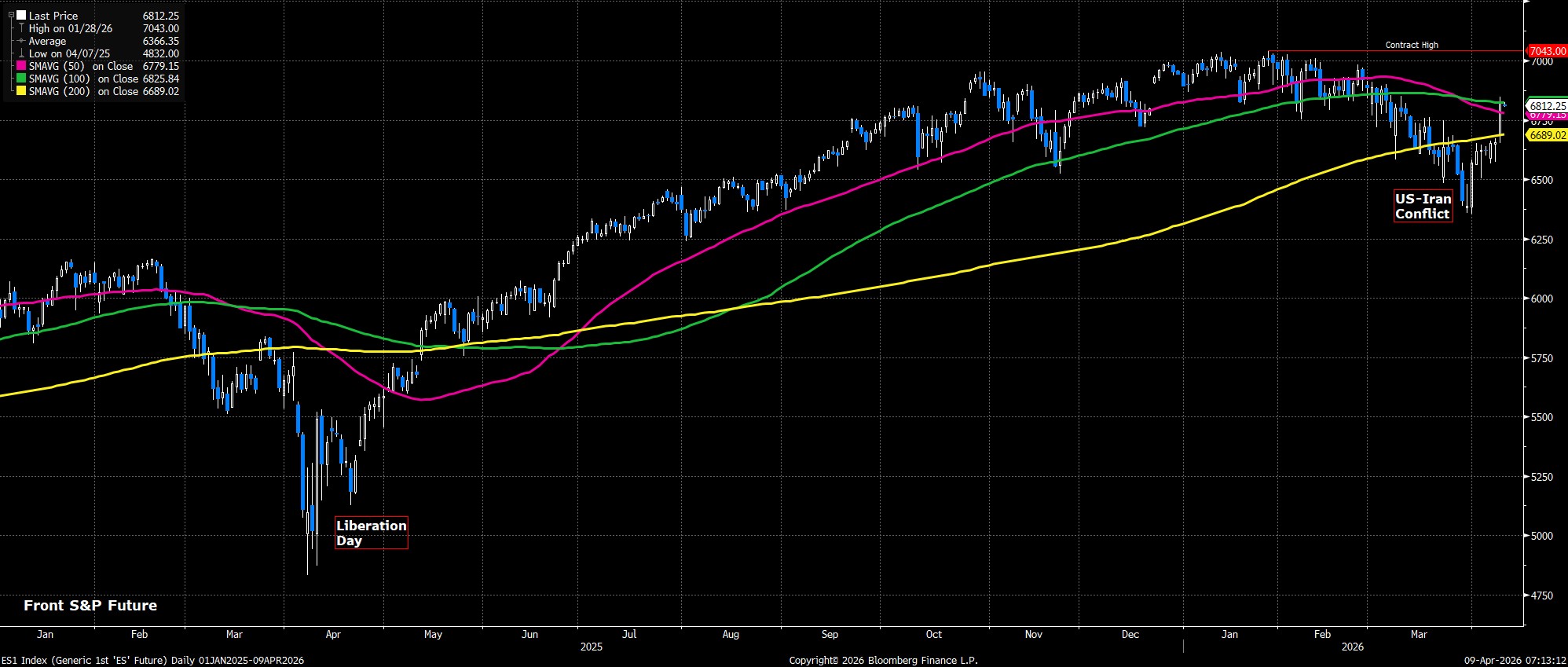
Naturally, the most important question for markets now, is where we head next.
Geopolitics Still A Major Focus
From a geopolitical perspective, there are two key issues that should remain in focus.
Firstly, the degree of progress being made in negotiations for a durable peace deal, with talks on that front set to take place in Pakistan over the weekend. Secondly, there is the matter of flows through the Strait of Hormuz normalising, and energy prices retracing. It probably goes without saying, but in order for sentiment to remain buoyant, participants will want to see the direction of travel remaining towards a deal being done, and the volume of transits through Hormuz slowly but steadily rising from here on in.
Importantly, there will be plenty of political spin and ‘hot takes’ on both of those fronts over the next week or so, though participants would be well-advised to ignore the noise, and focus on the direction in which things are actually heading, when assessing where things stand.
In any case, providing that both of those two factors do indeed pan out, and that there is no material re-escalation in the conflict, then we are probably at, or very close to, the point where financial markets – certainly equities – seek to draw a line under geopolitics. This is, to be clear, in no way meant to diminish the human toll that the conflict has taken, nor is it to ignore questions that linger over the inflation and growth implications that higher energy prices may cause. Instead, it is simply a reflection of how rapidly we typically see markets shift from one narrative, to another.
Narrative Focus May Soon Begin To Shift
If we are indeed shifting narratives, the obvious point we would shift back to is where we were pre-conflict, whereby while some jitters over the AI theme were present, the overarching theme was one of relatively broad-based economic robustness, resilient earnings growth, as well as looser monetary and fiscal backdrops.
I’d expect some of those AI worries to have dissipated a bit, given how valuations in the tech/software sectors have re-rated significantly lower since conflict broke out. Meanwhile, only time will tell on the ‘robust economy’ front, though a retracement in energy prices from here would clearly limit any macro headwinds that could well be on the horizon. As for earnings, the imminent Q1 reporting season will obviously be a key focus on this front.
The Cross-Asset Playbook
Zooming out, for markets, all this probably means a return to the pre-conflict playbook as well.
For stocks, that means that we’ve likely put in a tradeable bottom at 6,350 in spoos, and that dip buying will prove the ‘modus operandi’ across the equity space, with the exception of the energy sector that should face some near-term headwinds. Elsewhere, the greenback is likely to unwind any haven demand that we’ve seen over the last six weeks or so, while front-end Govvies still have plenty of work to do in pricing out the policy tightening that’s been discounted since conflict began. Gold, lastly, should also trade well, not only tagging along with the broader risk rally, but also benefitting from the reduced likelihood of EM CBs having to sell down holdings to prop up domestic FX.
In short, conflict isn’t over, and the headline noise hasn’t stopped, but markets are probably going to trade as if both of those have happened for the time being.
The material provided here has not been prepared in accordance with legal requirements designed to promote the independence of investment research and as such is considered to be a marketing communication. Whilst it is not subject to any prohibition on dealing ahead of the dissemination of investment research we will not seek to take any advantage before providing it to our clients.
Pepperstone doesn’t represent that the material provided here is accurate, current or complete, and therefore shouldn’t be relied upon as such. The information, whether from a third party or not, isn’t to be considered as a recommendation; or an offer to buy or sell; or the solicitation of an offer to buy or sell any security, financial product or instrument; or to participate in any particular trading strategy. It does not take into account readers’ financial situation or investment objectives. We advise any readers of this content to seek their own advice. Without the approval of Pepperstone, reproduction or redistribution of this information isn’t permitted.