- English (UK)


Crude Oil Hits New Lows: Oversupply Pressure Keeps Short-Term Gains Out of Reach
.jpg?height=93&quality=100)
Over the past two weeks, crude oil has remained under pressure, repeatedly breaking key support levels. On Tuesday, SpotBrent briefly fell below $60 per barrel, while SpotCrude touched $55, marking its lowest level since 2021.
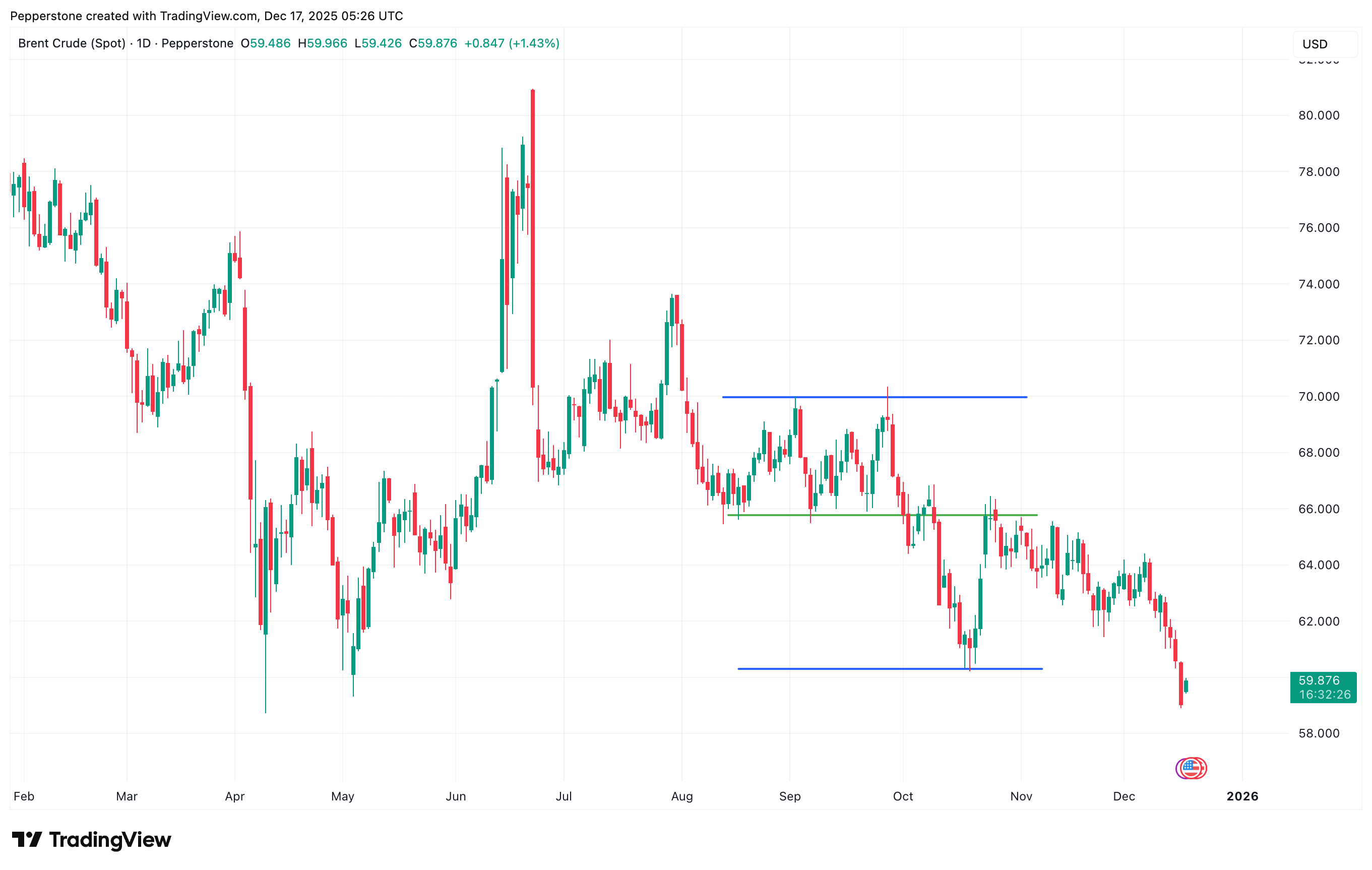
Although there was sporadic buying at today’s open, providing temporary support, sustained supply pressure, diminishing geopolitical risk premiums, and weak global demand suggest a lack of clear bullish momentum, keeping downward pressure on prices in the near term.
Oversupply Pressure Mounts: The Main Driver Behind Falling Prices
The primary factor behind ongoing price weakness is undoubtedly supply. Although OPEC+ has attempted to ease market glut through production cuts, results have fallen short of expectations. Saudi Arabia has abandoned its $100 oil target, slowing its production growth, yet global supply remains ample.
According to the U.S. Energy Information Administration (EIA), U.S. crude production reached nearly 13.8 million barrels per day by mid-December, returning to historic highs. Non-OPEC+ countries are also contributing incremental supply, such as Brazil’s gradual ramp-up of oil output, further pressuring prices.
At the same time, global inventories continue to build, with notable increases in the Asia-Pacific region. The International Energy Agency (IEA) reports that global crude stocks have reached a four-year high, further constraining potential price rebounds.
Geopolitical Tailwinds Fade, Risk Premiums Decline
Geopolitical risk, once a key support for oil prices, is now waning. Recent progress in Russia-Ukraine ceasefire talks, along with statements from Trump and European leaders, suggests a peace agreement is closer than before. This development directly reduces concerns over potential disruptions in Russian oil exports. If implemented, stranded Russian crude at sea could return to the market, adding to the supply glut.
Meanwhile, tensions between the U.S. and Venezuela persist as short-term disruptions, but global floating storage and pre-purchases of Venezuelan crude by several countries limit the impact of geopolitical events on prices.
Market reactions have been clear: oil often comes under pressure whenever positive news emerges from the peace talks, indicating that geopolitical factors have shifted from bullish support to potential downside risk.
Weak Demand Undermines Upward Momentum
Demand-side conditions remain weak. Despite the Northern Hemisphere entering winter, which would typically boost heating oil consumption, industrial activity and transportation demand are generally sluggish, with some fuel segments performing unevenly.
U.S. data shows that November nonfarm payroll growth stalled while unemployment rose, reinforcing concerns over an economic slowdown and limiting upward pressure on oil.
Refinery-level indicators confirm this picture. Cracking margins remain low, reflecting ample refinery supply and a lack of inventory-driven buying. Even if localized demand for jet fuel or heating oil rises, it is insufficient to offset the broader inventory burden.
Additionally, the copper-oil ratio remains elevated, signaling market caution regarding economic growth, further supporting the view that short-term demand is weak and oil prices struggle to gain traction.
Limited Upside, But Watch Key Risks
Overall, the recent decline in crude futures stems from a combination of weak macro conditions, oversupply, and receding geopolitical risk premiums. Persistent high inventories and production continue to weigh on prices, while the fading geopolitical premium reduces traditional support, and weak demand limits rebound potential.
Looking at the broader timeframe, with U.S. midterm elections approaching, 2026 may see simultaneous fiscal and monetary easing. To keep inflation in check, downward pressure on oil could serve as an indirect tool, meaning U.S. policy moves may compound existing supply pressures, sustaining price stress.
Against this backdrop, selling into rallies continues to attract trader interest, though attention to three main risks remains important:
- Sudden escalation of geopolitical conflicts could disrupt supply from key producing regions, pushing prices higher;
- Unexpected global economic recovery or stronger-than-expected demand from major consumers could ease oversupply;
- Sudden policy or regulatory changes, such as export restrictions, sanctions, or shifts in major producer strategies, could reshape the supply-demand balance.
The material provided here has not been prepared in accordance with legal requirements designed to promote the independence of investment research and as such is considered to be a marketing communication. Whilst it is not subject to any prohibition on dealing ahead of the dissemination of investment research we will not seek to take any advantage before providing it to our clients.
Pepperstone doesn’t represent that the material provided here is accurate, current or complete, and therefore shouldn’t be relied upon as such. The information, whether from a third party or not, isn’t to be considered as a recommendation; or an offer to buy or sell; or the solicitation of an offer to buy or sell any security, financial product or instrument; or to participate in any particular trading strategy. It does not take into account readers’ financial situation or investment objectives. We advise any readers of this content to seek their own advice. Without the approval of Pepperstone, reproduction or redistribution of this information isn’t permitted.