- English
- عربي


US Dollar Outlook: DXY Reversal, Oil Volatility and the Straits of Hormuz Driving Markets

Summary
• DXY failed to breakout above 100.40–96.00 range, reversing to the
• EURUSD rebound and USDJPY consolidation key drivers of recent USD weakness
• Oil remains the dominant macro driver across FX, equities and rates
• Volatility in crude has eased but remains highly elevated versus 12-month averages
• Straits of Hormuz disruption risk is central to global market direction
• Oman crude futures above $150 highlighting physical dislocations vs Brent futures - will Brent and WTI follow suit?
• Fed rate expectations have repriced higher, supporting USD, but the market still sees the Fed’s next move as a cut
• Equity resilience (S&P500 holding 200DMA, VIX ~22%) limiting USD upside for now
• Directional break in crude likely to dictate next major USD move
The US Dollar at a Critical Inflection Point
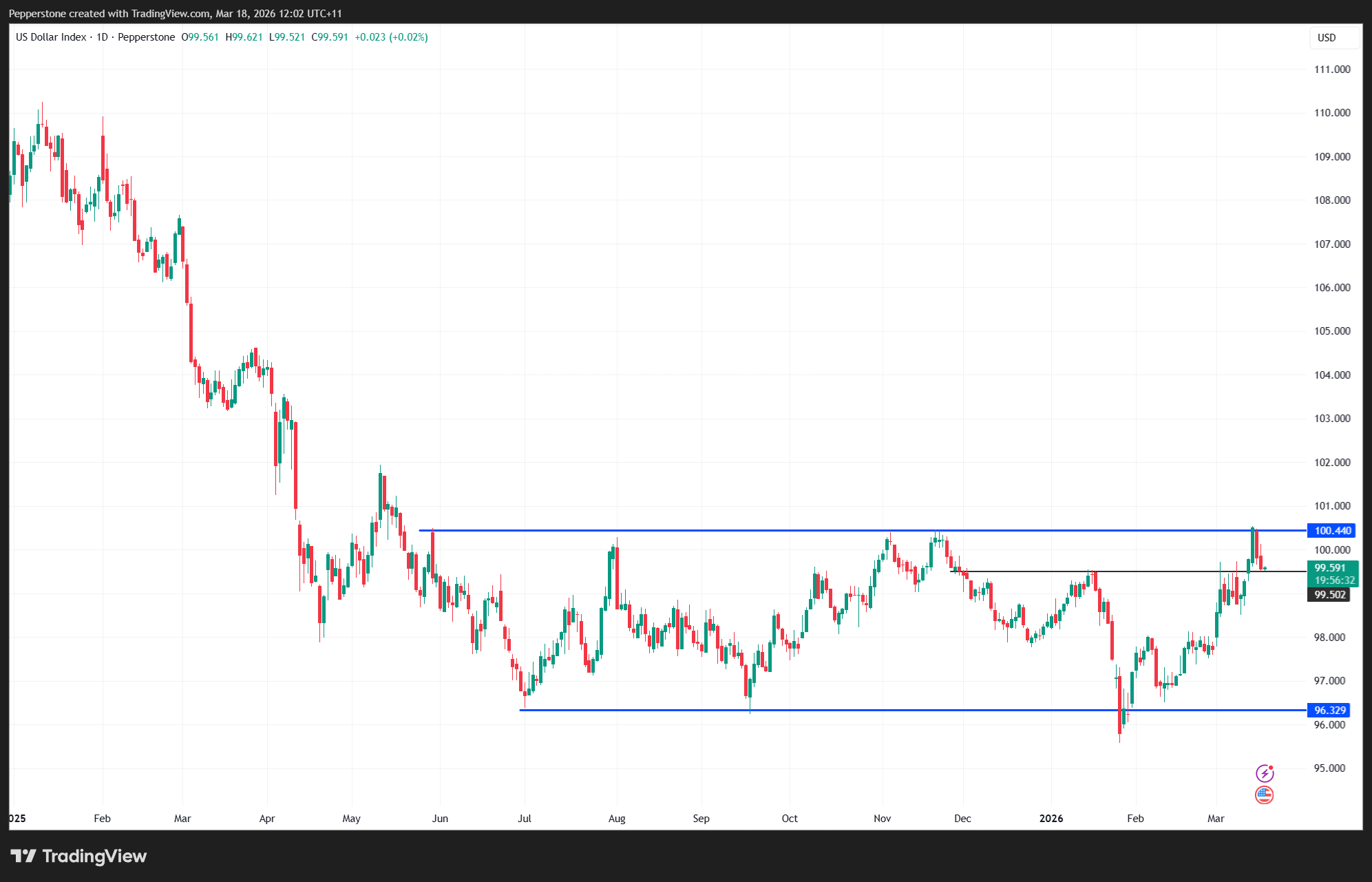
Last week, I highlighted how the dollar index (DXY) was threatening a breakout above the defined range held since June or August 2025 between 100.40 and 96.00. As is often the case with breakouts, many fail, and that failure can be a powerful signal for reversal - and, that is what has played out. The DXY pushed to 100.53 before reversing lower and is now threatening to test the January and March breakout zone around 99.50.
FX Drivers: EURUSD Reversal and USDJPY Consolidation
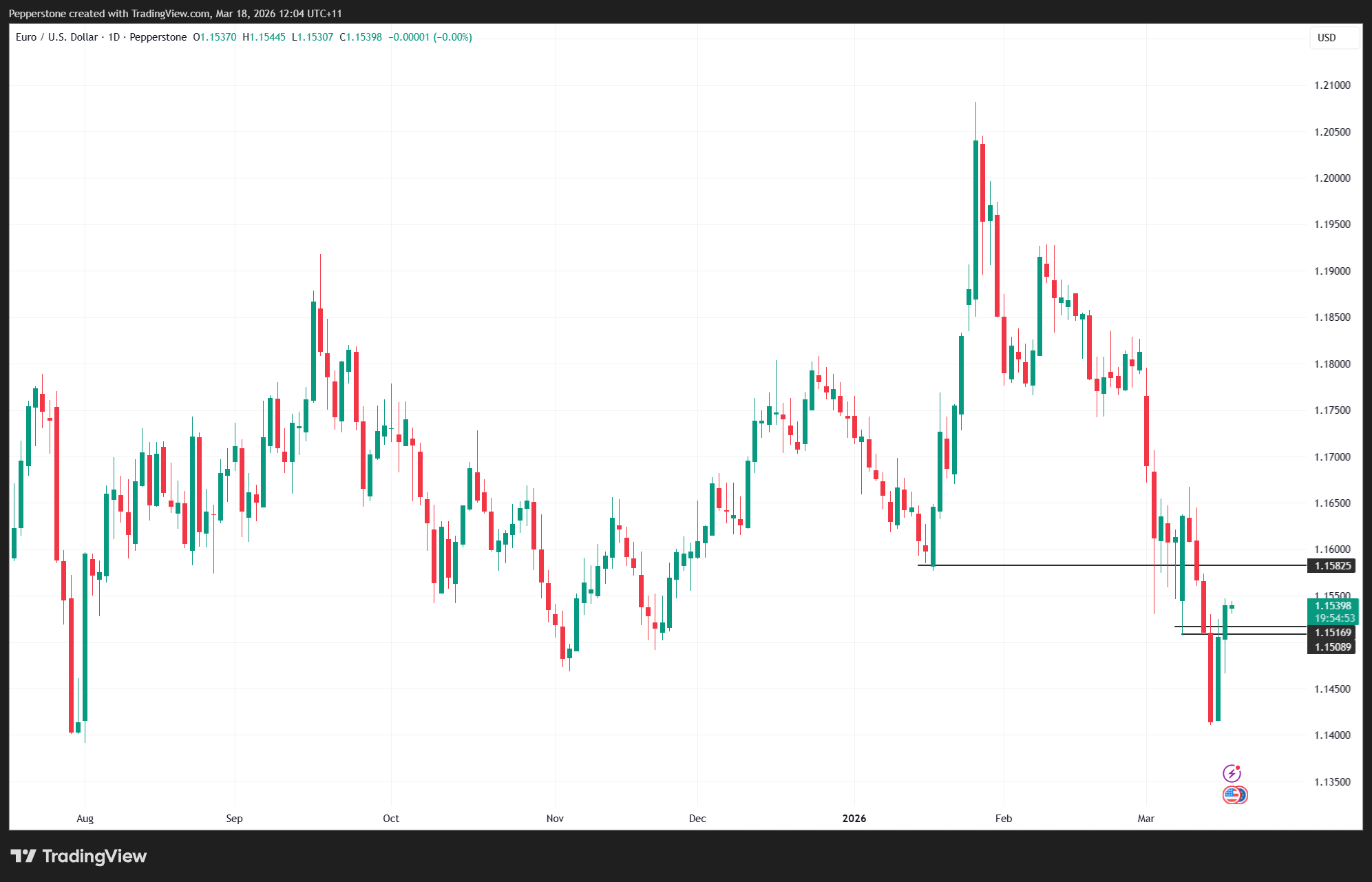
Much of the recent move in the DXY has been driven by a reversal higher in EURUSD. The pair broke higher, pushed toward 1.14, and has since extended to 1.1536.
At the same time, USDJPY, which had been pushing toward 160, is now consolidating just above 159.
This combination leaves the US dollar at a critical juncture, where former range highs could quickly come back into play.
Oil as the Dominant Macro Driver
Oil remains the key variable driving cross-asset price action. Moves in crude are directly influencing equities, rates, Treasuries and FX.
We have seen high-intensity moves in energy markets, although conditions have stabilised somewhat. Implied volatility in Brent and WTI has come off extreme levels. While still elevated relative to the 12-month average, pricing has pulled back from crisis conditions.
Straits of Hormuz: The Core Market Risk
The market’s primary focus remains on the functionality of the Straits of Hormuz. Iran’s control of the strait remains firm, and there is significant uncertainty around how the situation evolves. Speculation around the US attempting to escort tankers through the strait introduces clear escalation risk. Given the narrow structure of the waterway, any such move would require a substantial military presence and would likely be interpreted as an act of aggression.
Even if a US (and other allies) supported tanker were to pass safely, there is no guarantee that future shipments would face the same outcome.
Further escalation risks include threats to Iran’s Kharg Island oil infrastructure, a move previously considered but avoided by past US administrations due to the high probability of broad escalation.
Crude Oil Price Action and Technical Levels
The US dollar is taking its cues from both crude volatility and underlying price direction.
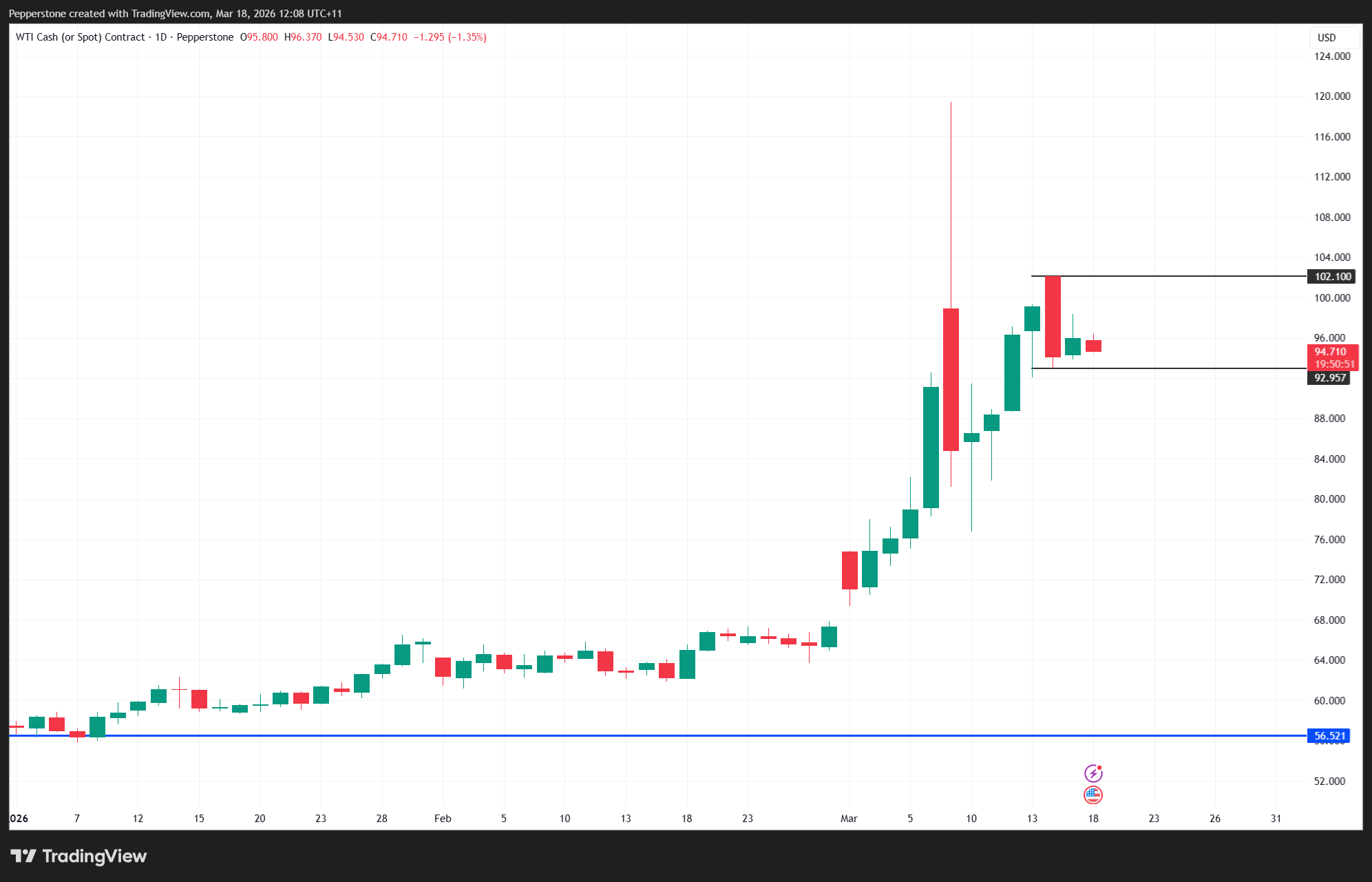
From a technical perspective, the 16 March candle range of 102.15 to 92.99 in SpotCrude is key. Since then, we have seen two daily inside bars, suggesting a breakout from this range could define the next directional move.
• Oil higher → USD stronger, risk assets under pressure
• Oil lower → USD weaker, improved risk sentiment
Physical Market Tightness and Price Dislocations
Oman crude futures and spot prices have pushed above $150 per barrel, while Brent and WTI have consolidated.
This divergence highlights tightness in Middle Eastern physical supply and broader market dislocations.
Key drivers include:
• Strategic reserve builds from the US and IEA nations
• Efforts to maintain flow efficiency through the strait
• Regional supply constraints
Should OECD inventories, particularly in the Atlantic basin, decline meaningfully, crude benchmarks such as Brent and WTI could move higher to catch up with Oman pricing.
Interest Rates and Fed Cut Expectations
Another key driver of USD strength has been the repricing in US interest rate expectations. The market’s perceived terminal rate has shifted from 2.9% to 3.43%, driven by higher inflation expectations linked to energy prices. This repricing supported a stronger USD. However, markets are currently pricing approximately one rate cut by December, which appears reasonable. A scenario where • Labour markets strengthen further
• Inflation expectations rise materially could force markets to consider rate hikes over the next 12 months, which would be a significant bullish catalyst for the USD.
For now, the dominant view remains that the next Fed move is a cut. Equity Market Resilience and Reduced Implied Equity Volatility Equities have shown notable resilience
• NAS100 futures trading between 25,500 and 24,000
• S&P500 holding the 200-day moving average
• VIX easing to around 22% If higher oil prices trigger a meaningful equity drawdown, the USD would likely strengthen in response.
The Macro Trigger: Oil, Inventories and Duration of Disruption
Ultimately, the duration and severity of disruption in the Straits of Hormuz will define the macro outlook.
If Atlantic basin inventories begin to draw down significantly and constraints persist
• Inflation expectations would rise
• US 2-year Treasury yields would likely move higher
• USD could break above range highs and enter a sustained bullish trend
This would also carry broader implications for US politics, including Republican prospects in the November midterm elections and Trump’s approval ratings.
The material provided here has not been prepared in accordance with legal requirements designed to promote the independence of investment research and as such is considered to be a marketing communication. Whilst it is not subject to any prohibition on dealing ahead of the dissemination of investment research we will not seek to take any advantage before providing it to our clients.
Pepperstone doesn’t represent that the material provided here is accurate, current or complete, and therefore shouldn’t be relied upon as such. The information, whether from a third party or not, isn’t to be considered as a recommendation; or an offer to buy or sell; or the solicitation of an offer to buy or sell any security, financial product or instrument; or to participate in any particular trading strategy. It does not take into account readers’ financial situation or investment objectives. We advise any readers of this content to seek their own advice. Without the approval of Pepperstone, reproduction or redistribution of this information isn’t permitted.