- English
- عربي


The US Dollar Is Breaking Out. Is a New Bull Market Emerging?

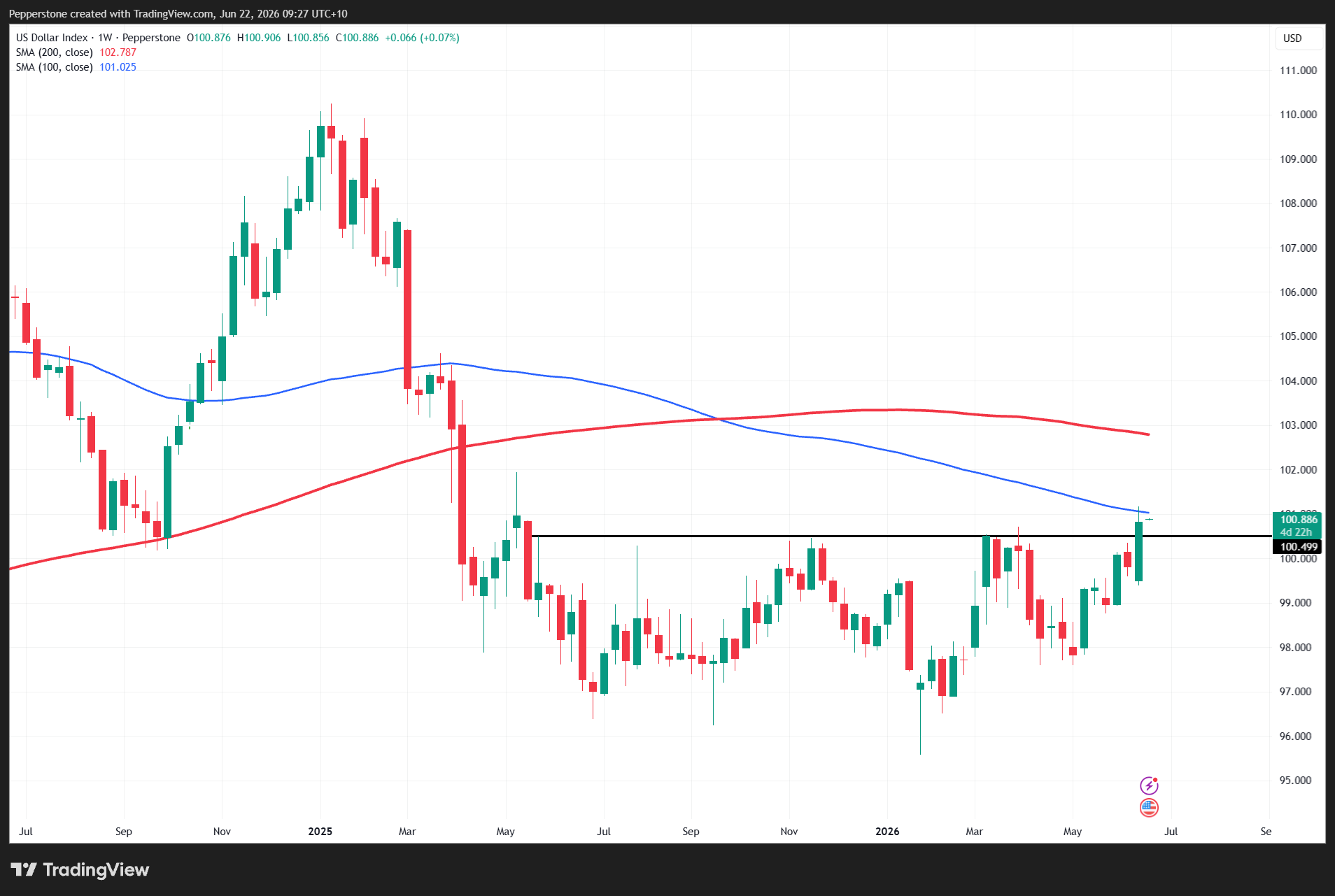
The question now is whether market participants can collectively forge a belief that the US dollar is once again the tactically attractive currency in the G10 universe and, in doing so, promote a more persistent bullish trend towards the 200-week moving average at 102.68.
Should that happen, the move could be amplified by systematic trend-following funds and increased buying from leveraged hedge funds - both of which add to positions as price trends build and become established.
There will be a number of hurdles and resistance levels along the way. Traders should remain open-minded to the possibility that USD upside, just as much as they should remain open to the prospect that the breakout fails and falls back into its previous well-defined range. Yet the signs are beginning to emerge that being broadly long US dollars may become an increasingly consensus position.
The Kevin Walsh Era Begins at the Fed
Last week's Federal Reserve meeting was undeniably hawkish.
In fact, we saw the largest move higher in US two-year Treasury yields following the first meeting of a new Fed Chair since 1978. Kevin Walsh has ushered in a new era at the Federal Reserve, with potential changes not only to how the institution communicates with markets, but also to how policy itself is set.
There are clearly meaningful changes underway.
Walsh delivered a short but well-defined statement on inflation and given inflation has remained above the Fed's target for more than five years, markets appear to have interpreted his comments as restoring a degree of credibility to the central bank.
That matters.
One increasingly wonders whether part of the recent appreciation in the US dollar has been driven by investors assigning a higher credibility premium to the Federal Reserve under Walsh. If so, that is inherently a US dollar positive.
Why the US Dollar Looks Increasingly Attractive
There is a lot to like about the US dollar at the moment.
Firstly, there is nothing more emotive in markets than price itself.
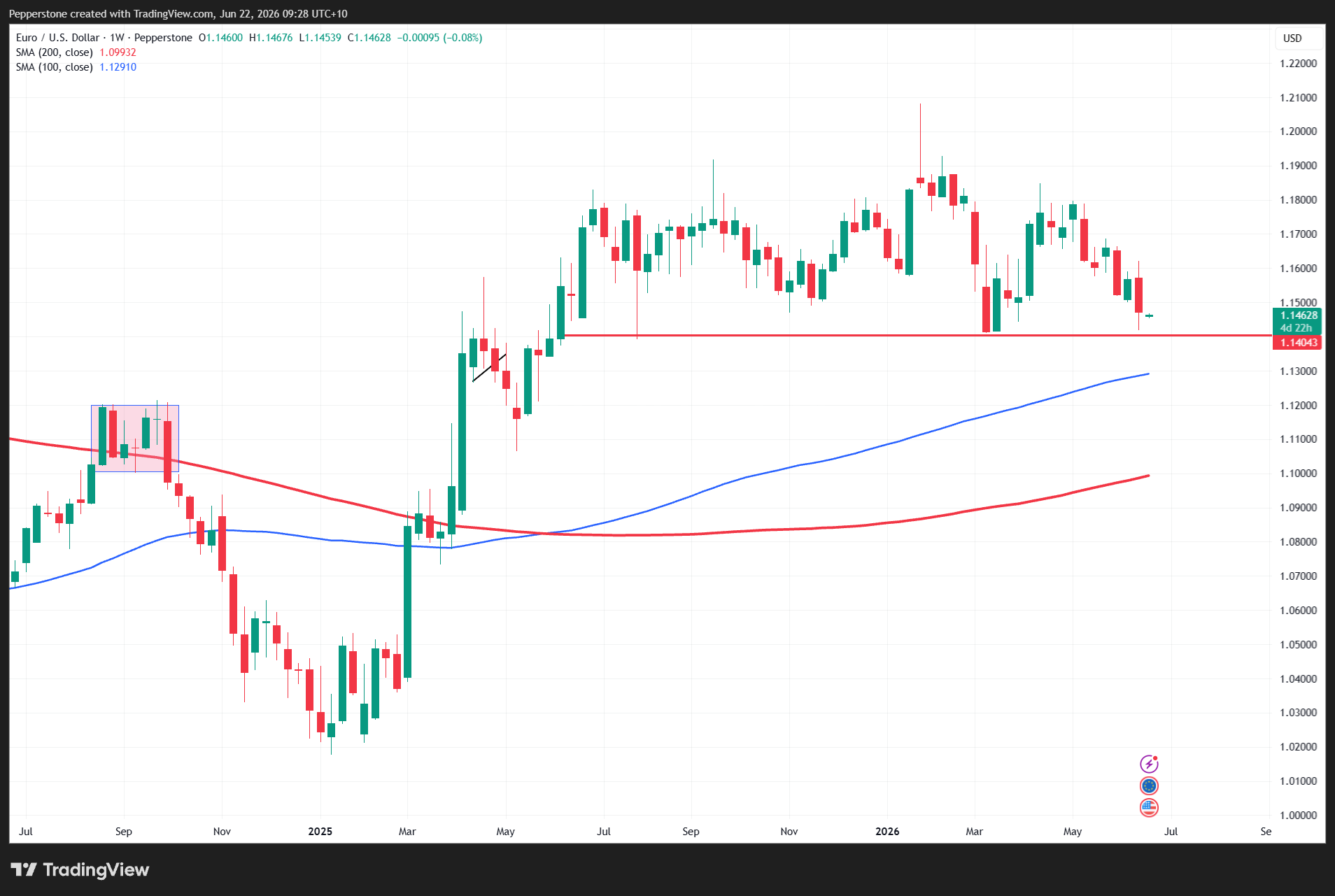
If the DXY pushes through 102 and higher, which would be driven by EURUSD breaking firmly below 1.14, USDJPY extending towards 162, USDCAD pushing through 1.42 and GBPUSD breaking below the year-to-date lows around 1.3177, then the trend itself becomes the story.
Momentum feeds itself, strength begets strength,
Secondly, unlike many other major economies, the United States combines above-target inflation with comparatively robust growth and an improving labour market.
That is an important distinction.
Many regions are grappling with some degree of mild stagflation, where inflation remains elevated but growth is falling or already weak. The US economy, by contrast, continues to expand at a pace superior to most other G10 nations.
The AI trade is once again back in vogue, capital flows continue to be directed towards US assets and the concept of American exceptionalism is beginning to re-emerge.
That relative growth advantage and attractiveness as an investment destination is a powerful tailwind for the currency.
Fed Rate Expectations Are Driving The Move
The interest rates market is also becoming increasingly supportive for the USD
US interest rate markets are currently pricing a 39% probability that the Federal Reserve hikes rates in July. If not July, then September or October are increasingly viewed as live meetings.
That repricing of Fed expectations has been a substantial tailwind for the US dollar.
A July rate hike still feels too early.
For that to happen, several events would need to play out in unison...
This week's core PCE inflation report would likely need to come in above expectations of 3.4% year-on-year. That would then need to be followed by another strong non-farm payrolls report on 2 July and a hot CPI inflation release on 14 July.
Should all of those conditions materialise, the Fed may decide there is little value in waiting and instead move quickly to get ahead of inflation pressures.
But that is asking a lot.
It still feels more likely that the Fed would prefer to wait until September, if not October, before hiking again.
Nevertheless, markets trade expectations and the repricing for the possible start date for future hikes have already been enough to support the dollar.
What to like about the USD…?
The US dollar is starting to look somewhat magical again.
It offers:
• Relative growth & labour market dynamics
• Relative interest rate advantage – carry is working well and desirable in FX
• A more credible central bank
• The world's most desirable equity market – AI and Space attracting
• Renewed capital inflows through AI and technology
There are increasing signs of relative attractiveness.
And that matters because currencies rarely trend for one reason alone. They trend when multiple forces align.
At present, the US dollar appears to be benefiting from a combination of growth, rates, credibility and technical momentum.
The Key Levels To Watch
Technically, the next major hurdle sits at the 100-week moving average at 101.03.
This level acted as resistance last week and sellers were active there.
Should the dollar break and close decisively above this area, attention would quickly shift towards the 200-week moving average at 102.687.
This is not just another technical level.
Historically, the 200-week moving average has often defined regime shifts in currency markets.
A sustained break higher could encourage additional buying from systematic funds and leveraged investors, potentially creating a self-reinforcing rally.
What Would A Stronger US Dollar Mean For Markets?
Should the dollar continue to strengthen, the implications would extend far beyond FX.
Emerging market currencies would likely face renewed pressure.
The Japanese yen could weaken further.
Gold, which remains highly sensitive to both real yields and the US dollar, could come under pressure and potentially move back towards the $4,000 level.
Emerging market equities and US dollar-sensitive assets may struggle, while markets such as the Hang Seng could continue to underperform relative to the NAS100.
This is why the current move matters.
The US dollar is not simply another currency. It is the world's reserve asset, the dominant invoicing currency for global trade and arguably the most important price in financial markets.
If a new bull trend is emerging, traders across FX, commodities, equities and rates will need to adapt.
For now, the breakout remains in its early stages.
But with Kevin Walsh at the helm of the Federal Reserve, a more hawkish policy backdrop and rates markets increasingly pricing higher for longer, the signs are beginning to emerge that the US dollar may once again become the market's preferred currency.
The material provided here has not been prepared in accordance with legal requirements designed to promote the independence of investment research and as such is considered to be a marketing communication. Whilst it is not subject to any prohibition on dealing ahead of the dissemination of investment research we will not seek to take any advantage before providing it to our clients.
Pepperstone doesn’t represent that the material provided here is accurate, current or complete, and therefore shouldn’t be relied upon as such. The information, whether from a third party or not, isn’t to be considered as a recommendation; or an offer to buy or sell; or the solicitation of an offer to buy or sell any security, financial product or instrument; or to participate in any particular trading strategy. It does not take into account readers’ financial situation or investment objectives. We advise any readers of this content to seek their own advice. Without the approval of Pepperstone, reproduction or redistribution of this information isn’t permitted.