- English
- 中文版


Have We Hit a Tradable Low in the S&P500 and Global Equity Markets?

Summary - Key Takeaways
• Equity markets staged a strong rebound, with broad-based buying and positive internals
• Geopolitical rhetoric has turned more constructive, supporting risk sentiment
• Prediction markets still show uncertainty, with ceasefire odds priced at 35% by end-April
• Positioning flows, short covering, and options hedging played a key role in the rally
• Momentum traders now look for follow-through above key technical levels
• High volume and strong breadth suggest a meaningful shift, not just noise
• Asia has followed through, reinforcing the global risk-on tone
Have We Hit a Tradable Low in Equities?
Have we seen a tradable low in equities and in the market’s pricing of geopolitical risk?
The latest session certainly suggests a shift in tone. Price action has been constructive, with traders actively rotating into ‘bounce-back’ candidates and re-engaging with risk. Those who bought the dip will now be looking for follow-through - specifically a break above session highs to confirm momentum and extend the move through the week.
Geopolitical Narrative Turns More Constructive
The news flow has tilted more favourably for risk assets. Comments from Donald Trump suggesting a potential US withdrawal from the Middle East within 2–3 weeks, combined with more conciliatory rhetoric from Iranian officials, have helped improve sentiment.
While Trump’s timeline aligns with prior messaging around winding down operations, markets have taken greater comfort from the tone out of Iran, which has signalled a willingness to move toward resolution.
That said, most market participants still view the situation as highly complex. Prediction markets reflect this uncertainty, pricing:
• ~35% probability of a ceasefire by end-April
• ~52% probability by end-May
Importantly, markets may not wait for a formal ceasefire before repricing risk. We are already seeing early signs of capital being redeployed as probabilities shift, albeit not decisively.
Markets Reprice Risk Ahead of Resolution
As expectations for de-escalation gradually build, traders are adjusting positioning accordingly. This “probability reweighting” is driving flows back into equities, even as key risks remain unresolved - particularly around control dynamics involving Hamas and broader regional stability.
Interestingly, equities may continue to rally even if crude oil prices remain elevated in the short term. The historically tight correlations between oil, inflation expectations, and equities - especially evident since February - may begin to loosen. Positioning, Flows, and a Reset in Risk Tuesday’s rally was not purely organic.
Several flow dynamics were at play:
• Month- and quarter-end rebalancing flows
• Reduction in tail-risk hedges, notably through the options markets
• Aggressive short covering
• Options dealer hedging flows skewed toward buying S&P 500 futures
This resulted in a meaningful positioning reset. However, volume and order flow suggest that genuine buying interest was also present, adding credibility to the move.
Momentum Traders Eye Key Levels
For momentum-focused traders, the low itself is less important than confirmation through price action.
The key level now sits in the S&P 500 (US500):
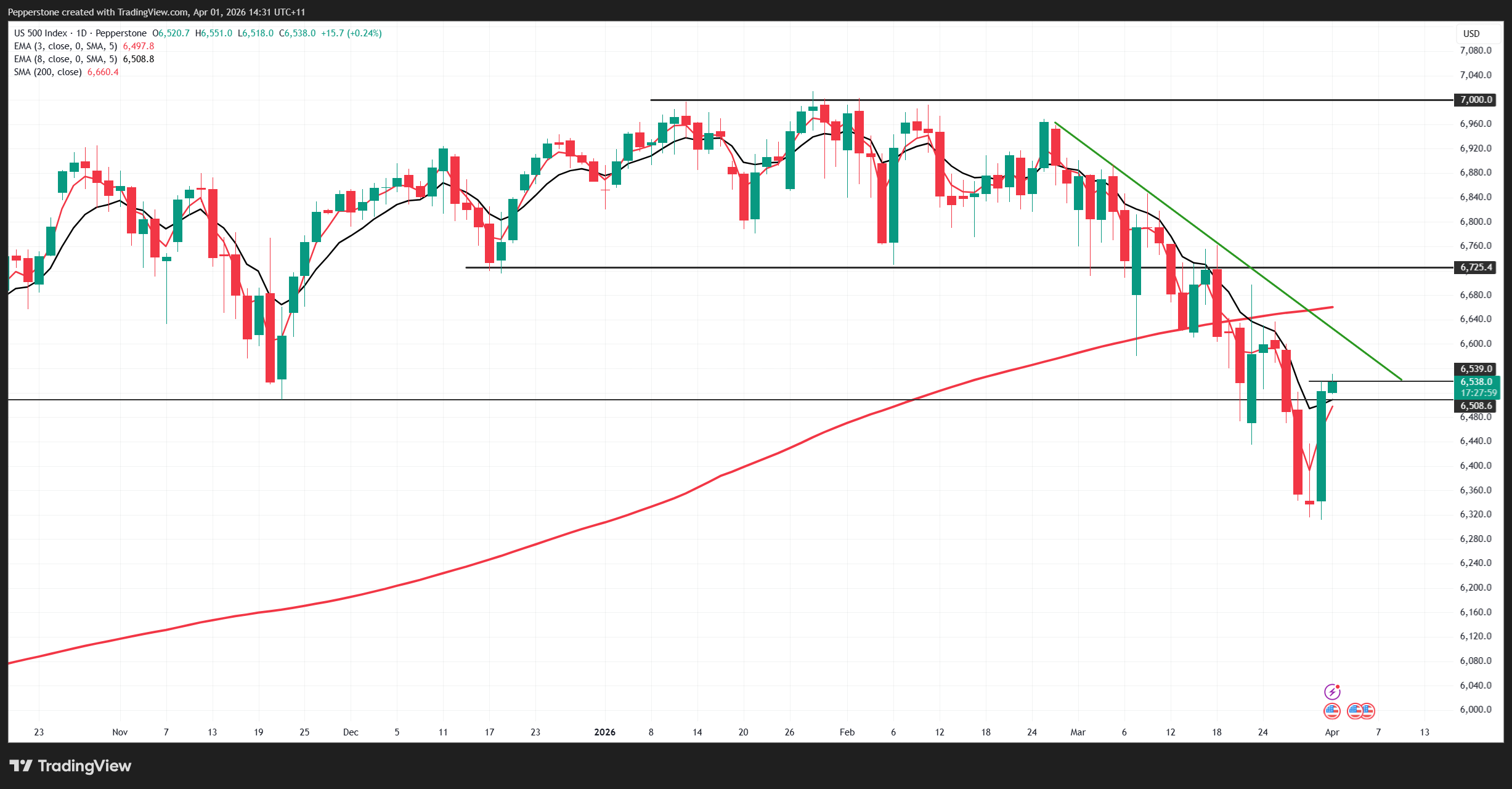
• A daily close above 6539 (Tuesday’s high) would signal follow-through
• Upside targets then come into focus at: o 6630 - the downtrend from 25 February o 6660 - the 200-day moving average
A break and hold above these levels would likely attract additional systematic and momentum-based buying. Market Internals Show Strength Under the hood, the session was undeniably strong: • 9 of 11 S&P sectors closed higher • 83% of stocks finished in the green • The ‘Mag7’ basket had its best session since 12 May 2025 • The broader S&P 500 recorded a 3.3 standard deviation move These are not characteristics of a weak bounce - they point to broad participation and strong internal momentum. Volume Confirms the Move Volume metrics also support the validity of the rally: • NASDAQ-100 ETF (QQQ) traded 94 million shares vs ~70 million average
• S&P 500 cash volumes were 13% above the 30-day average
• 2.22 million S&P 500 futures contracts traded
• 6.31 million S&P 500 options contracts changed hands
For a ~3% rally, elevated volume is essential - and while not extreme, it was sufficiently strong to validate the move.
Short Covering and High-Beta Leadership
Leadership came from high-beta and heavily shorted areas:
• Retail trader favourites: +5.4%
• AI-linked equities: +6.3%
• Most shorted stocks: +7.1%
- Semis
This clearly highlights a strong short squeeze dynamic, with traders positioned for downside forced to cover. Additionally, memory and semiconductor names such as SanDisk and Micron Technology saw strong demand, reinforcing the appetite for cyclical and growth exposure.
Asia Confirms the Risk-On Tone
Asian markets have followed the US lead:
• Nikkei 225 +4%
• ASX 200 +1.7%
• KOSPI +6.4%
The KOSPI, a standout performer in 2026, continues to attract momentum flows, while the Nikkei is showing renewed strength.
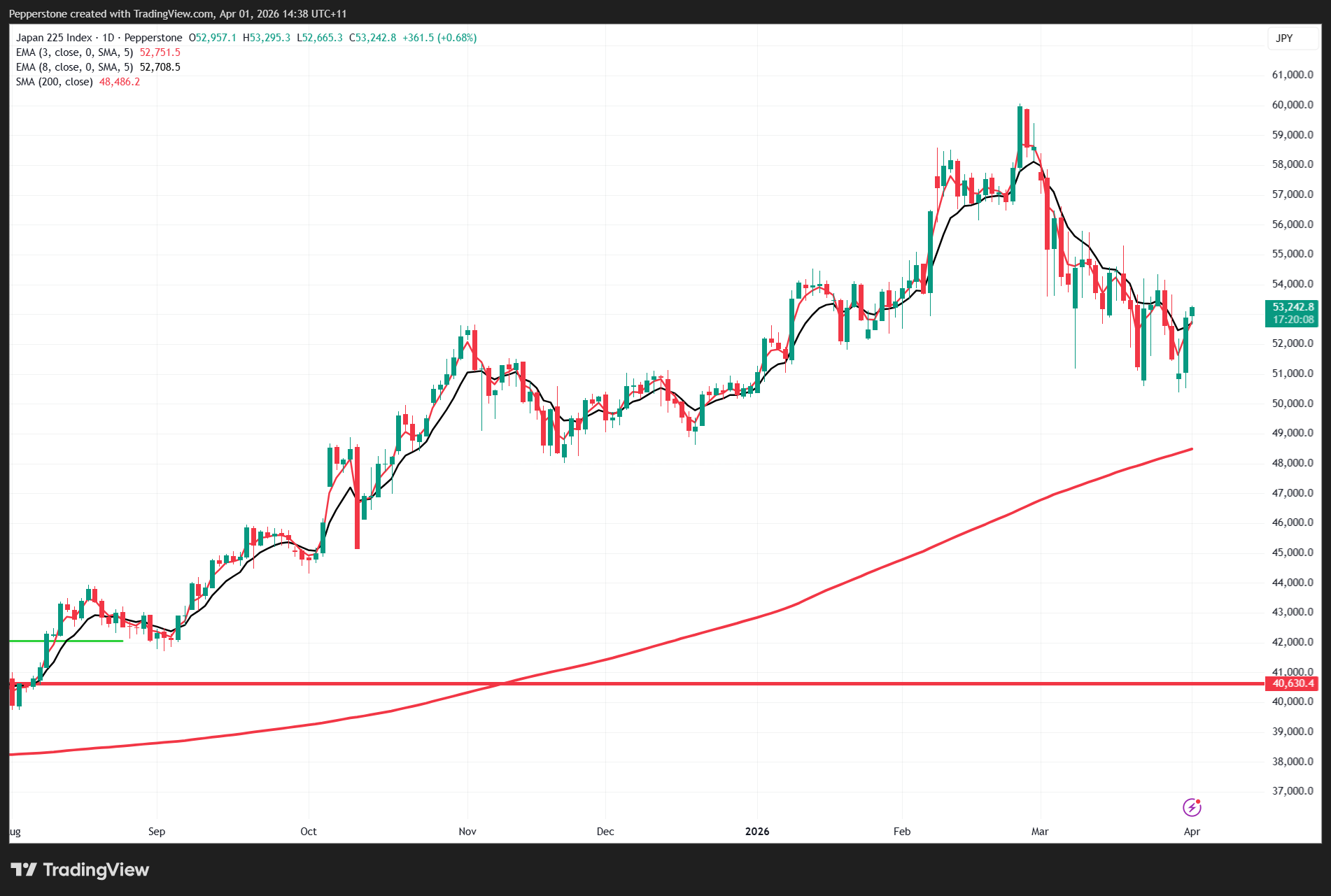
This global synchronisation reinforces the idea that markets are beginning to price a more constructive geopolitical outcome. What Comes Next? The key question now is whether this rally evolves into sustained upside or fades as positioning normalises. If follow-through buying emerges - beyond flow-driven repositioning - equity markets could push higher in the near term.
However, with geopolitical risks still unresolved and probabilities only gradually shifting, volatility is unlikely to disappear. For now, the market is leaning toward optimism - but it remains a conditional one.
Good luck to all.
The material provided here has not been prepared in accordance with legal requirements designed to promote the independence of investment research and as such is considered to be a marketing communication. Whilst it is not subject to any prohibition on dealing ahead of the dissemination of investment research we will not seek to take any advantage before providing it to our clients.
Pepperstone doesn’t represent that the material provided here is accurate, current or complete, and therefore shouldn’t be relied upon as such. The information, whether from a third party or not, isn’t to be considered as a recommendation; or an offer to buy or sell; or the solicitation of an offer to buy or sell any security, financial product or instrument; or to participate in any particular trading strategy. It does not take into account readers’ financial situation or investment objectives. We advise any readers of this content to seek their own advice. Without the approval of Pepperstone, reproduction or redistribution of this information isn’t permitted.