- English
- 中文版



Summary - Key Takeaways
• Gold is failing to act as a traditional safe haven due to rising US real yields
• Inflation expectations and higher energy prices are driving aggressive rate repricing
• Technical breakdowns have reinforced bearish momentum in XAUUSD
• Volatility is extreme, with one-week implied volatility above 50%
• Options skew shows strong demand for downside protection
• Gold is increasingly trading as an inverse to bond yields
• Short-term flows dominate, with traders forced into intraday positioning
Gold Volatility Forces Traders to Adapt
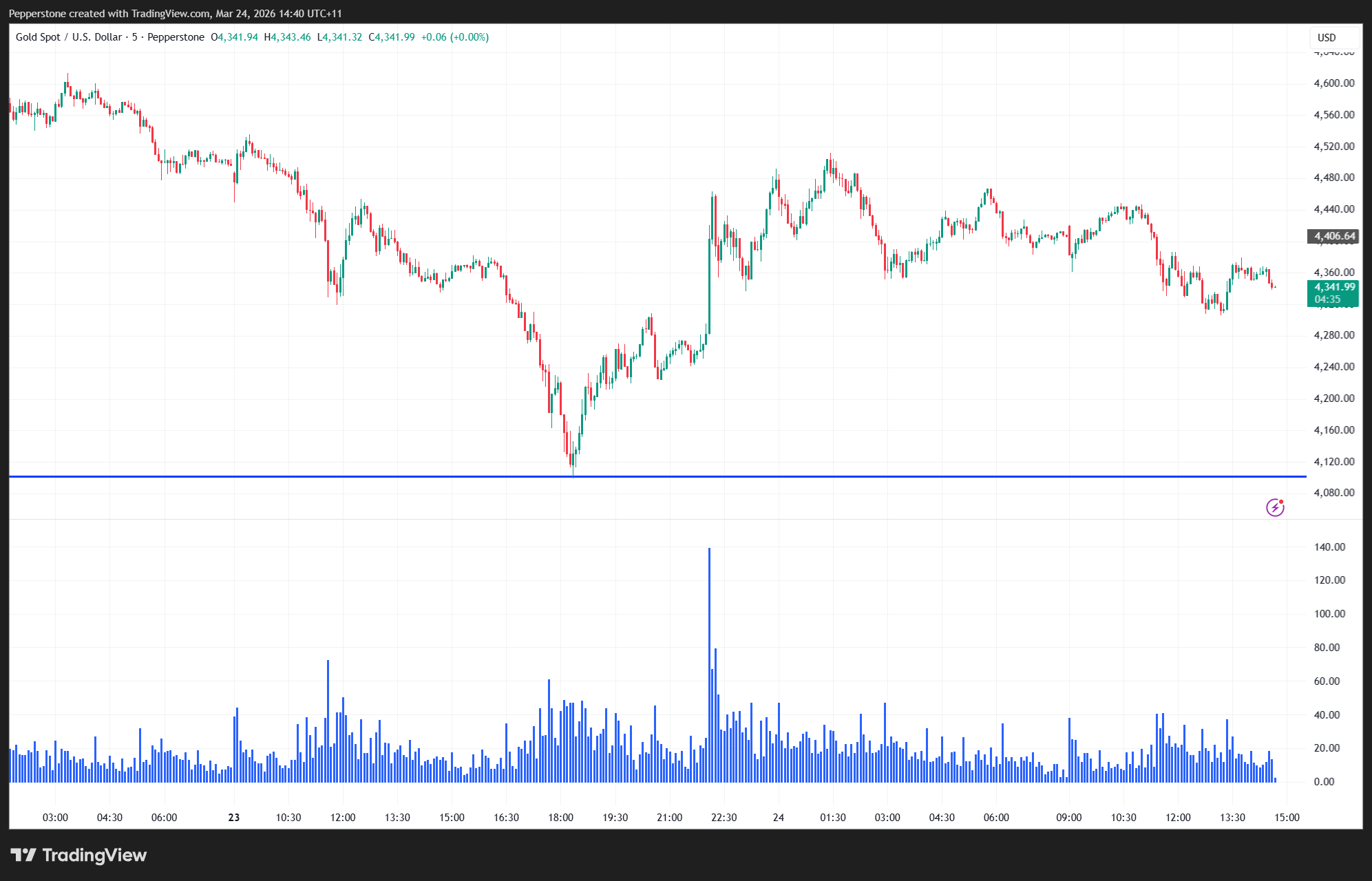
The recent price action in XAUUSD has been highly dynamic, forcing traders to adapt quickly. Markets are demanding a more tactical approach, with participants needing to stay nimble, respond to intraday flows, and remain open-minded to rapidly shifting price direction.
Holding periods have shortened significantly, with fewer traders willing to carry risk unless positions are actively managed or automated. With gold moving in ranges of $100, execution timing and responsiveness have become critical.
Why Gold Is Not Acting as a Safe Haven
The question of why gold is failing to behave as a safe haven has become increasingly prominent across markets. While there is no single explanation, we see some key drivers that do stand out.
Rising Real Yields Are a Key Headwind
One of the most important factor is the resurgence in the (inverse) relationship between US 'real' bond yields (bond yields adjusted for expected inflation) and XAU - as the real potential returns in the bond market increase, this reduces the appeal to hold gold.
As short-term inflation expectations rise, driven in part by higher energy prices and supply shocks, the markets pricing of central banks policy path has altered significantly - with markets now implying a number of G10 central banks will hike multiple times through 2026.
This has led to a repricing of interest rates markets has been a major negative for the gold market.
Technical Breakdown Reinforces Bearish Momentum
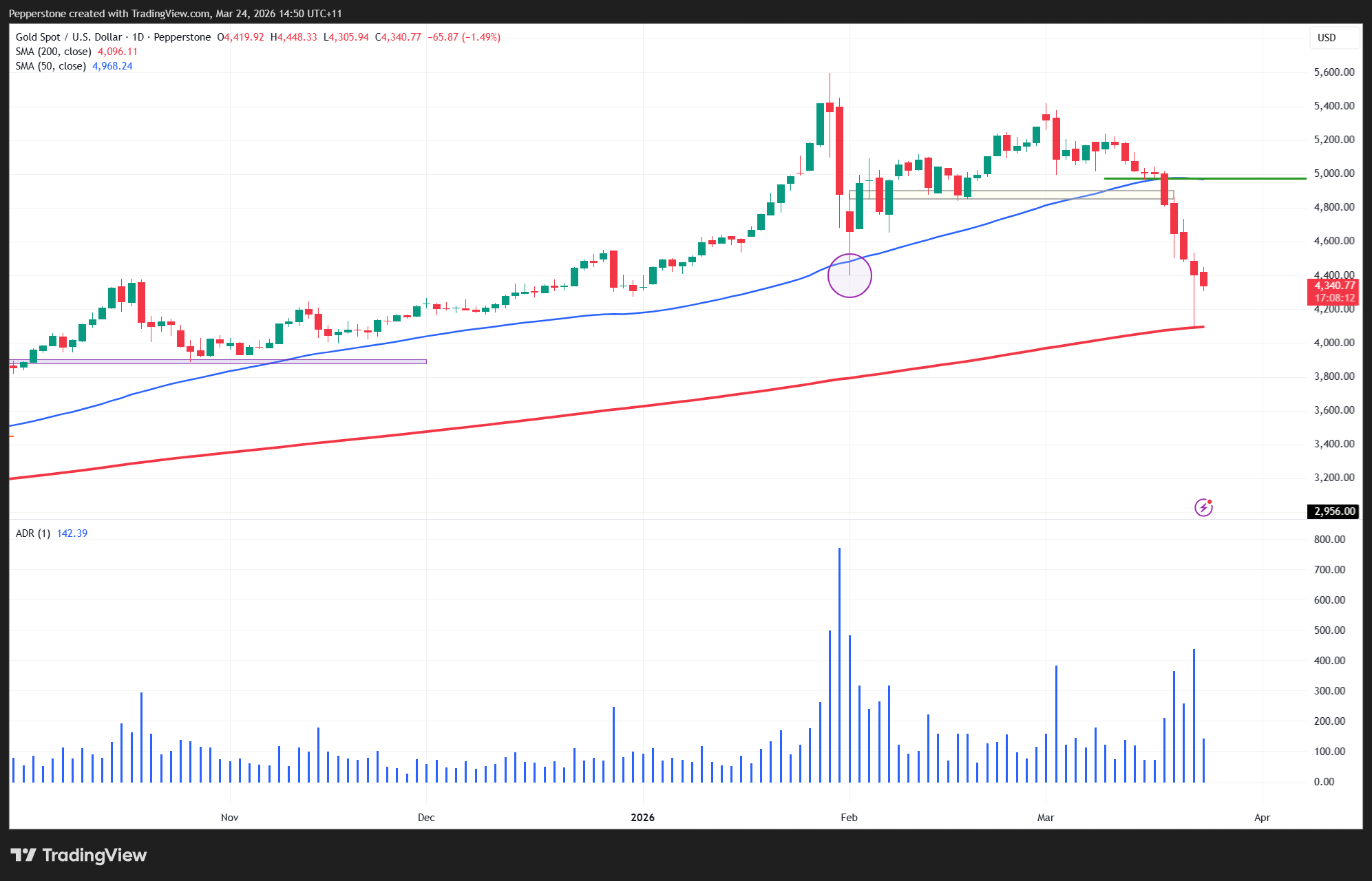
Price action itself has played a critical role in shaping sentiment. On 18 March, XAUUSD broke below 5000 - not just round number support but a level that marked clear indecision (highlighted by doji candles) in the two days prior, as well as the 50-day MA. This breakdown triggered a shift in market structure, with a clear pattern of lower highs and lower lows emerging. The result has been sustained downside momentum, with gold declining for an extended period.
Trend-following strategies and systematic traders have amplified these moves, reinforcing bearish positioning.
Extreme Volatility and Options Market Signals
Volatility in gold is at exceptionally elevated levels. One-week at-the-money implied volatility has risen above 50%, placing it among the highest readings of the past decade. This implies average daily price swings of around 3.2%, highlighting the intensity of current trading conditions.
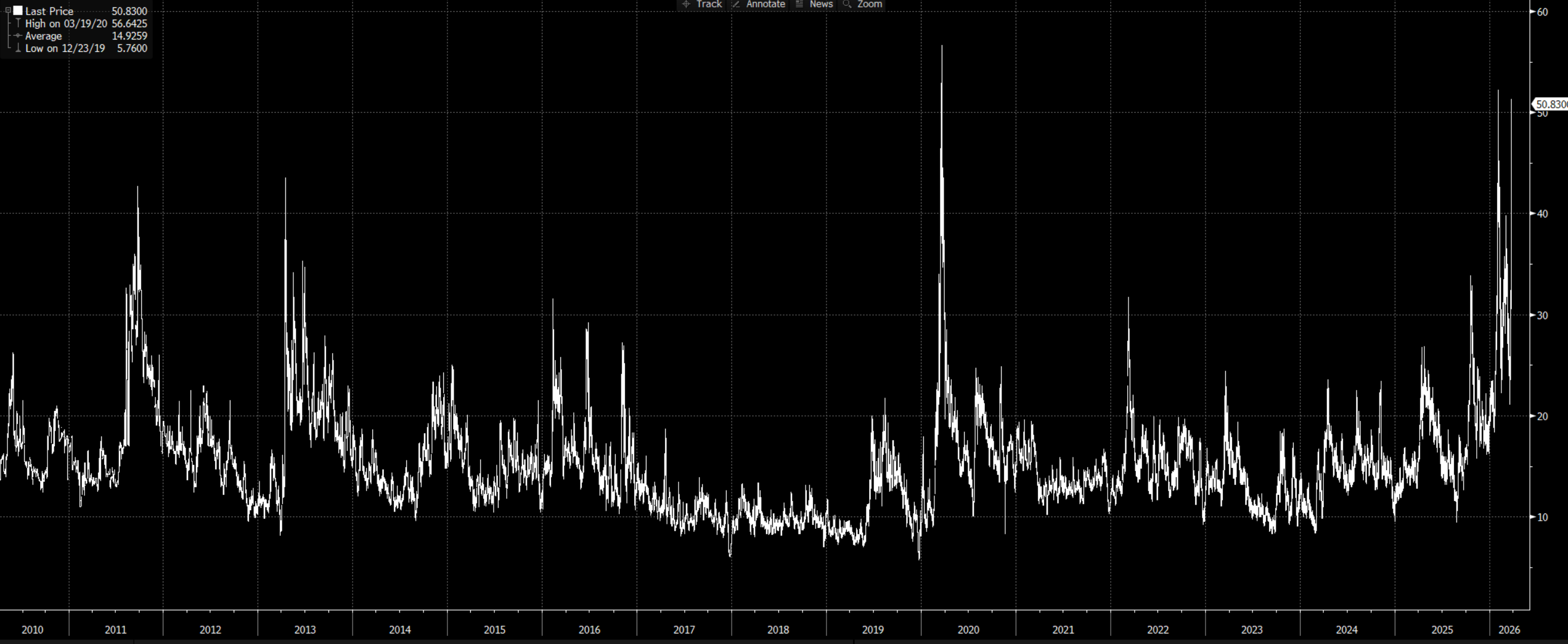
Options markets are also signalling strong bearish sentiment:
• One-week 25-delta put volatility trades at a 5.6 volatility premium to calls
• This represents the widest downside skew since 2013
• Represents a significant skew in the demand for downside protection relative to gold upside exposures.
These dynamics suggest that market makers may need to sell futures into weakness, reinforcing downside moves.
Intraday Trading Dominates Market Behaviour
Given the scale of volatility, the gold market has increasingly become a short-term trading environment.
Participants are focused on capturing intraday flows rather than holding directional views over longer horizons. This shift reflects both the speed of price movement and the elevated level of uncertainty.
Traders unable to actively manage positions are reducing exposure, contributing to thinner liquidity and sharper moves.
Key Catalysts: Geopolitics and Energy Prices
Recent price action around the 200-day moving average highlighted how sensitive gold is to macro headlines. Following a delay in geopolitical escalation timelines, markets saw:
• Equity markets rally
• Bond yields fall
• Oil prices decline
• Gold prices rebound sharply
This underscores how cross-asset flows are dictating gold’s direction, rather than traditional safe-haven demand.
Outlook: Oversold Bounce or Continued Downtrend?
While sentiment remains weak and momentum is skewed to the downside, gold is becoming increasingly oversold.
A credible move towards geopolitical de-escalation could trigger a sharp relief rally, particularly given the extent of bearish positioning. However, risks remain tilted to the downside:
• A renewed rise in energy prices could push yields higher
• Weekend gap risk remains elevated
• Rallies may continue to be sold into
The Bottom Line
Gold is currently trading in a regime defined by rates, volatility, and short-term flows rather than traditional safe-haven dynamics.
For now, the key relationship to watch is clear: higher bond yields likely mean lower gold prices.
Until that dynamic shifts, gold is likely to remain a tactical, high-volatility market best suited to active traders operating on shorter timeframes.
The material provided here has not been prepared in accordance with legal requirements designed to promote the independence of investment research and as such is considered to be a marketing communication. Whilst it is not subject to any prohibition on dealing ahead of the dissemination of investment research we will not seek to take any advantage before providing it to our clients.
Pepperstone doesn’t represent that the material provided here is accurate, current or complete, and therefore shouldn’t be relied upon as such. The information, whether from a third party or not, isn’t to be considered as a recommendation; or an offer to buy or sell; or the solicitation of an offer to buy or sell any security, financial product or instrument; or to participate in any particular trading strategy. It does not take into account readers’ financial situation or investment objectives. We advise any readers of this content to seek their own advice. Without the approval of Pepperstone, reproduction or redistribution of this information isn’t permitted.